
What's Happening?
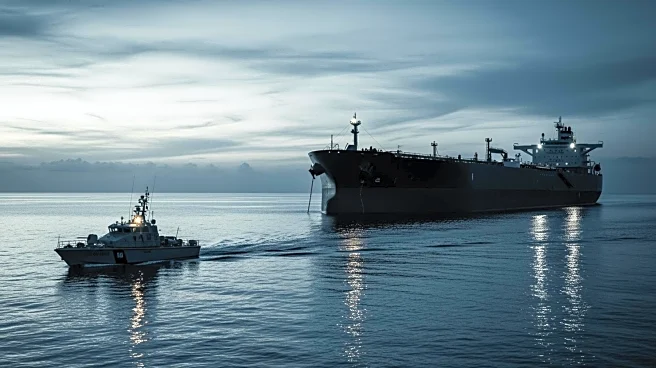
The United States is preparing to intercept the oil tanker Bella 1, which is linked to Venezuela and accused of operating within a 'shadow fleet' transporting illicit oil. The tanker, initially headed
for Venezuela, changed its course to avoid seizure by the U.S. Coast Guard. The vessel, which has historically carried Venezuelan crude oil, is now believed to be between Scotland and Iceland. The U.S. Coast Guard had previously attempted to board the Bella 1 in the Caribbean, suspecting it of breaking U.S. sanctions by shipping Iranian oil. The tanker has since reflagged from Guyanan to Russian, complicating legalities. President Trump has ordered a blockade of sanctioned oil tankers entering and leaving Venezuela, a move criticized by the Venezuelan government as 'theft'.
Why It's Important?
This development underscores the ongoing tensions between the U.S. and Venezuela, particularly concerning oil sanctions. The interception of the Bella 1 is part of a broader U.S. strategy to enforce sanctions against Venezuela, which could impact global oil markets and international relations. The U.S. aims to curb Venezuela's oil exports, a critical revenue source for the country, potentially exacerbating economic challenges within Venezuela. The situation also highlights the complexities of international maritime law, especially with the vessel's reflagging to Russian, which could strain U.S.-Russia relations.
What's Next?
The U.S. is likely to continue its efforts to intercept and seize other sanctioned oil tankers linked to Venezuela. This could lead to increased military and diplomatic activities in the region, with potential responses from Venezuela and its allies, including Russia. The international community will be watching closely, as further actions could influence global oil prices and geopolitical dynamics.