



What's Happening?
Malaysia has extended the operating license of Australian company Lynas Rare Earths for its refinery in Pahang state for another ten years. However, the extension comes with a critical condition: the elimination of radioactive waste production by 2031.
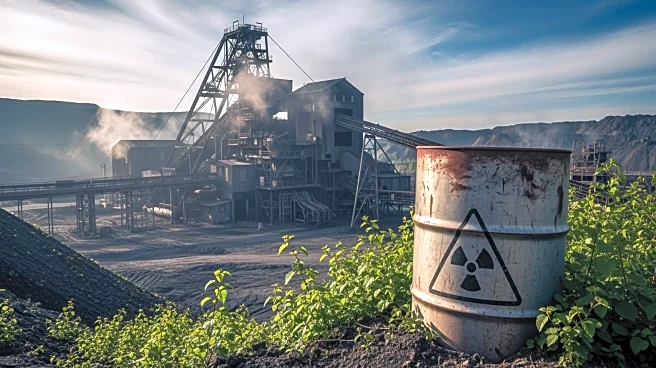
The Lynas facility, operational since 2012, is the first rare earth refinery outside China and has been under scrutiny due to environmental concerns over radioactive waste. Science Minister Chang Lih Kang announced that the waste must be treated and neutralized, with no new permanent storage facilities allowed. The license will be reviewed in five years, and failure to meet conditions could lead to revocation. Activists have opposed the facility, urging the removal of radioactive materials from Malaysia. The government has committed to preventing further accumulation of such waste, with current waste to be stored in a facility under development.
Why It's Important?
The decision to extend Lynas's license while imposing strict waste management conditions highlights Malaysia's balancing act between economic interests and environmental safety. Rare earth elements are crucial for manufacturing advanced technologies, and Lynas's facility plays a significant role in diversifying global supply chains away from China. However, the environmental risks associated with radioactive waste pose significant health and safety concerns. The Malaysian government's conditions aim to mitigate these risks while maintaining the economic benefits of hosting a major rare earth processing facility. This move could influence other countries with similar facilities to adopt stricter environmental regulations, potentially reshaping the global rare earth industry.
What's Next?
Lynas has a five-year window to upgrade its infrastructure to meet the new waste management requirements. The company must demonstrate effective waste neutralization through thorium extraction or other methods. The Malaysian government will conduct a mandatory review of the license in five years, assessing compliance with the conditions. If Lynas fails to meet the requirements, the license could be revoked. The development of the permanent storage facility for existing waste is expected to be completed by the end of the year. The outcome of these efforts will be closely watched by environmental groups and industry stakeholders, as it could set a precedent for future operations in the rare earth sector.