







What's Happening?
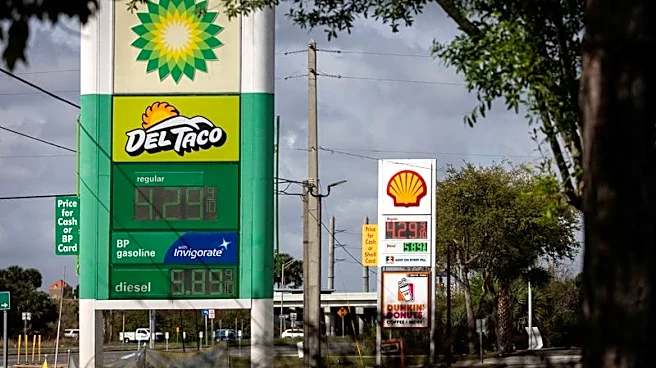
In Michigan, the cost of unleaded regular gasoline has decreased by 15 cents over the past week, according to AAA. This decline comes amid broader national concerns about rising fuel prices, which have been driven by geopolitical tensions and disruptions
in oil supply. The decrease in Michigan offers some relief to consumers who have been facing higher transportation and utility costs.
Why It's Important?
The drop in gas prices in Michigan provides temporary relief to consumers, potentially boosting local economic activity as residents have more disposable income. However, the broader national trend of rising fuel prices remains a concern, as it affects transportation costs, consumer spending, and overall economic stability. The situation in Michigan may serve as a case study for other states looking to manage fuel costs and their impact on local economies.
What's Next?
If the trend of decreasing gas prices continues in Michigan, it could lead to increased consumer confidence and spending in the state. However, sustained relief will depend on broader national and international factors, including geopolitical developments and oil market dynamics. State and local governments may consider measures to stabilize fuel prices and support economic resilience.
Beyond the Headlines
The fluctuation in gas prices highlights the interconnectedness of local and global economies. It underscores the importance of energy policy and infrastructure investments to ensure stable and affordable energy supplies. Additionally, the situation may prompt discussions on energy efficiency and alternative transportation options to reduce dependency on volatile fuel markets.