







What's Happening?
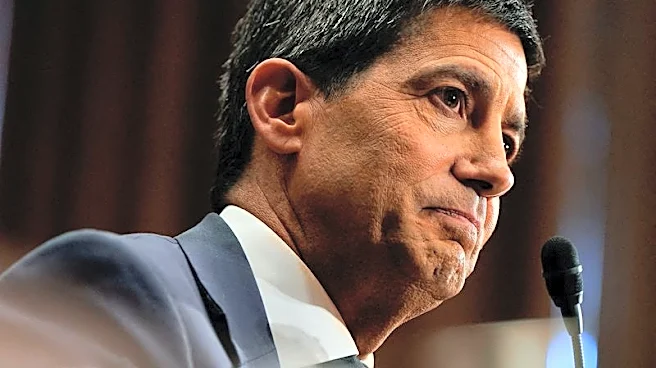
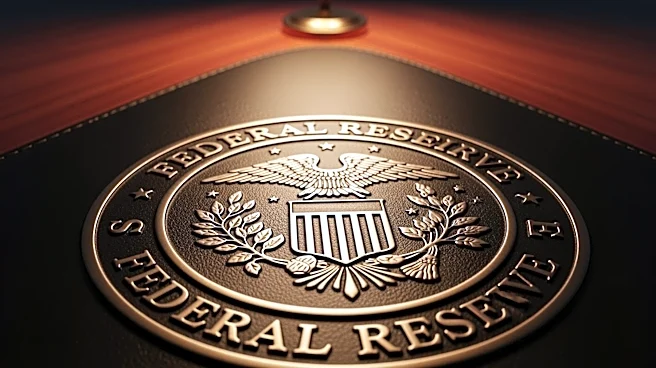
Kevin Warsh has been confirmed by the Senate to the Federal Reserve's board of governors, with a vote of 51 to 45. This confirmation also advances his nomination to become the chairman of the central bank, succeeding Jerome Powell. Warsh's confirmation follows
a contentious process, marked by a hold from Sen. Thom Tillis due to a Justice Department investigation into Powell. The investigation, which was related to Powell's testimony about renovations at the Fed's headquarters, was recently dropped, allowing Warsh's nomination to proceed. Warsh, who previously served on the Fed's board from 2006 to 2011, is known for his stance as an inflation hawk. During his confirmation hearing, he emphasized the importance of maintaining the Fed's independence and denied making any deals with President Trump regarding interest rates.
Why It's Important?
Warsh's confirmation is significant as it positions him to influence U.S. monetary policy at a critical time. His reputation as an inflation hawk suggests a potential shift in the Fed's approach to interest rates, which could impact economic growth and inflation control. The confirmation also highlights the ongoing political dynamics within the Fed, as Warsh's nomination was initially stalled due to political maneuvering related to an investigation of Powell. This development underscores the complex interplay between the Fed's independence and political pressures, which could have long-term implications for its policy decisions and credibility.
What's Next?
With Warsh's confirmation, attention will turn to his potential policies as Fed chair. Stakeholders, including financial markets and policymakers, will closely watch his approach to interest rates and economic challenges such as global tariffs and energy prices. Warsh's emphasis on Fed independence suggests he may resist political pressures to cut rates, which could lead to tensions with the administration. Additionally, his handling of inflation and economic growth will be critical as the U.S. navigates potential economic headwinds.