







What's Happening?
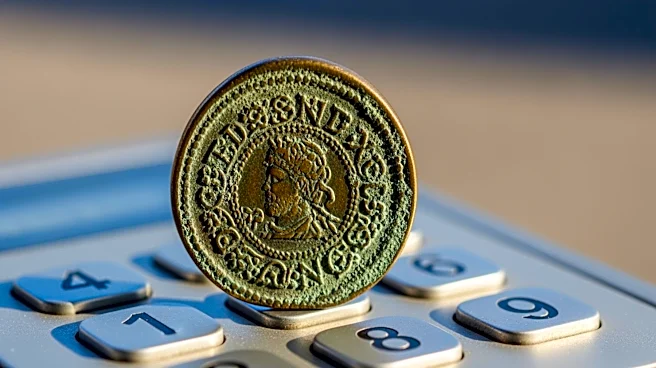
A 2,000-year-old coin, originally from the Carthaginian empire, was unknowingly used as bus fare in England. The artifact, produced in what is now Cadiz, Spain, was recently donated to Leeds Museums and Galleries. The coin was collected in the 1950s by
James Edwards, a Leeds City Transport employee, who set aside coins that couldn't be cashed, including foreign currency. His grandson, Peter Edwards, later researched the coin's origins and donated it to the Leeds Discovery Center. The coin, bearing the image of the god Melqart, reflects the historical practice of Phoenician coins carrying Greek imagery to appeal to traders.
Why It's Important?
The discovery of the Carthaginian coin highlights the historical connections and trade routes that existed between ancient civilizations. It underscores the cultural and economic exchanges that took place across regions, influencing the design and circulation of currency. The coin's presence in England suggests historical interactions that may have involved soldiers or traders. This find enriches the collection at Leeds Museums and Galleries, offering educational opportunities and insights into ancient history for the public.