







What's Happening?
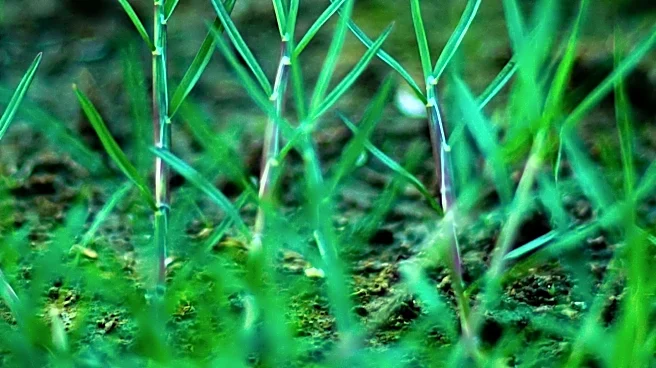
Researchers at Texas A&M AgriLife have successfully mapped the full genetic blueprint of zoysia grass, a popular turfgrass used in lawns and sports fields across the southern and transitional U.S. regions. This breakthrough was achieved by a team led
by Murukarthick Jayakodi, Ph.D., and is expected to significantly enhance the precision of turfgrass genetics and breeding. The newly discovered genome allows scientists to identify genes responsible for traits such as stress tolerance, which is crucial for developing more resilient grass varieties. This advancement is expected to streamline the breeding process, reducing the time and effort traditionally required for field testing.
Why It's Important?
The complete genetic mapping of zoysia grass represents a major advancement in agricultural science, particularly in the field of turfgrass breeding. By understanding the genetic makeup of zoysia grass, researchers can develop new varieties that are more resistant to environmental stresses such as drought and heat. This is particularly important in the context of climate change, where water conservation and heat tolerance are becoming increasingly critical. The ability to breed more resilient grass varieties could have significant economic and environmental benefits, reducing the need for water and maintenance while maintaining the aesthetic and functional qualities of turfgrass.
What's Next?
Following this discovery, researchers plan to use the genetic information to develop molecular tools that can further enhance the breeding process. These tools will help identify and select for desirable traits more efficiently, potentially leading to the development of new zoysia grass varieties that are better suited to changing environmental conditions. The research team also aims to expand their work to other species of zoysia grass, further broadening the potential applications of their findings. This ongoing research could lead to significant improvements in turfgrass management and sustainability.