





What's Happening?
Iran's chief negotiator, Mohammad Baqer Qalibaf, has issued a warning to the United States regarding potential escalations in Lebanon. This comes in response to a U.S. naval blockade of Iran and recent Israeli military actions in Lebanon. Qalibaf, who
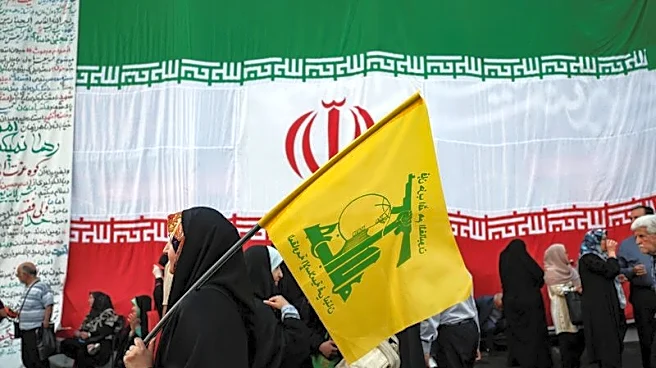
is also the speaker of Iran's parliament, stated that U.S. bases in the Middle East and Israeli assets could become legitimate targets due to these actions. The warning follows Israeli attacks on Hezbollah's stronghold in Lebanon's southern suburbs, which have heightened tensions in the region. Qalibaf criticized the U.S., Israel, and their allies, suggesting that they only understand the language of power. This development underscores the fragile geopolitical situation in the Middle East, where military actions and political rhetoric continue to escalate.
Why It's Important?
The warning from Iran's top negotiator highlights the increasing tensions in the Middle East, particularly involving the U.S., Israel, and Iran. The potential for escalation in Lebanon could have significant implications for regional stability and international relations. U.S. military bases and Israeli assets being labeled as legitimate targets could lead to increased military confrontations, affecting global oil markets and international security. The situation also underscores the complex dynamics between Iran and its adversaries, which could influence U.S. foreign policy and military strategy in the region. The involvement of Hezbollah and the ongoing conflict in Lebanon further complicate the geopolitical landscape, potentially drawing in other regional and global powers.
What's Next?
The situation in Lebanon and the broader Middle East is likely to remain tense, with potential for further military actions and diplomatic confrontations. The U.S. and its allies may need to reassess their strategies to prevent further escalation. Diplomatic efforts could be intensified to address the underlying issues and reduce tensions. The international community, including the United Nations, may become more involved in seeking a resolution to the conflict. Monitoring the responses from major stakeholders, such as the U.S., Israel, and Iran, will be crucial in understanding the future trajectory of this situation.