






What's Happening?
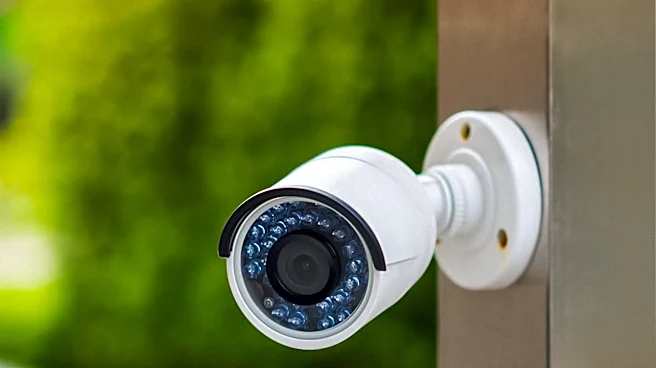
U.S. Representatives Thomas Massie (R-Ky.) and Eric Burlison (R-Mo.) have co-sponsored the FLOCK OFF Act, a bipartisan bill aimed at prohibiting the use of taxpayer money to fund AI-enhanced surveillance cameras. The proposed legislation specifically
targets controversial technologies like Automated License Plate Recognition (ALPR) and biometric data collection systems, such as those produced by Flock Safety. Congressman Massie stated that the federal government should not provide 'security' grants to cities and police departments that have turned their communities into a 'version of 1984.' Congressman Burlison emphasized that while technology changes, constitutional rights do not, asserting that the Fourth Amendment protects Americans from unreasonable searches and that advances in surveillance technology should not compromise privacy and liberty. The bill seeks to prevent federal funds from being used to purchase, lease, install, or maintain these camera systems and prohibits the renewal of existing contracts. It also mandates the removal of such technology within 180 days of the bill's enactment for entities currently receiving taxpayer funds, with exceptions for U.S. Border Patrol within one mile of the border for security purposes and for toll collection.
Why It's Important?
This proposed legislation is highly significant as it addresses growing concerns about privacy and the potential for a surveillance state in the U.S. The proliferation of AI-enhanced surveillance cameras, with at least 138,000 ALPR cameras mapped across the country by September 2026, raises substantial civil liberties issues. Critics argue that these cameras can be used to track law-abiding citizens, and there are documented cases of individuals using them for harassment and stalking. Furthermore, the ability of the federal government to purchase data collected by these private companies effectively bypasses constitutional protections against unwarranted surveillance. The FLOCK OFF Act aims to safeguard the Fourth Amendment rights of Americans by preventing federal funding from contributing to what lawmakers describe as an erosion of privacy. This bill could set a precedent for how emerging technologies are regulated to protect individual freedoms against potential government overreach, impacting both law enforcement practices and the surveillance technology industry.
What's Next?
If the FLOCK OFF Act gains traction and passes, it would significantly alter the landscape of surveillance technology funding and deployment across the U.S. State and local governments, as well as police departments, would be barred from using federal funds for AI surveillance cameras, potentially forcing them to dismantle existing systems or find alternative, non-federal funding. This could lead to a reduction in the number of ALPR and biometric cameras in operation, particularly in areas heavily reliant on federal grants. The surveillance technology industry, including companies like Flock Safety, Axon Enterprise, and Motorola Solutions, which have invested heavily in lobbying efforts, would face a substantial challenge to their business model. Conversely, civil liberties organizations and privacy advocates would likely view this as a major victory. The debate surrounding this bill will also highlight the ongoing tension between public safety concerns and individual privacy rights in the digital age, potentially leading to further legislative efforts to regulate AI and surveillance technologies.
Beyond the Headlines
The FLOCK OFF Act touches upon fundamental ethical and legal questions regarding the balance between security and liberty in a technologically advanced society. The concept of a 'surveillance state' evokes concerns about government control and the erosion of democratic freedoms, drawing parallels to dystopian narratives. Ethically, the widespread deployment of ALPR and biometric cameras raises questions about consent, data ownership, and the potential for algorithmic bias in surveillance. Legally, the bill reinforces the interpretation of the Fourth Amendment in the context of modern technology, asserting that digital surveillance should not circumvent constitutional protections against unreasonable searches. Culturally, the public's reaction to such technologies reflects a broader societal debate about the role of technology in everyday life and the extent to which individuals are willing to trade privacy for perceived security. This legislative effort could trigger a long-term shift in how the U.S. approaches privacy in the digital realm, potentially leading to more robust legal frameworks for data protection and surveillance oversight.