







What's Happening?
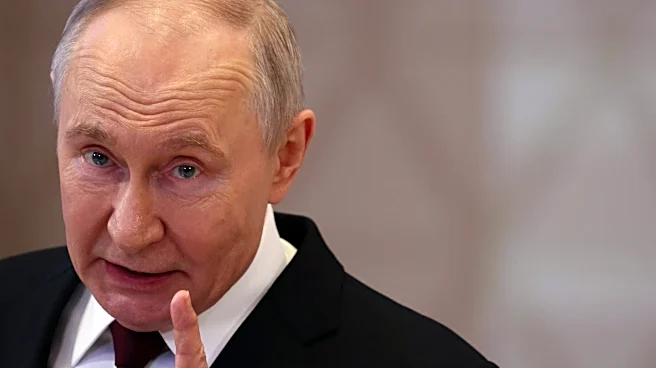
President Vladimir Putin of Russia and Prime Minister Abiy Ahmed of Ethiopia held discussions during the 2026 Russia-Africa Summit, emphasizing the strengthening of bilateral relations. The talks highlighted a significant increase in mutual trade, which
exceeded US$1.3 billion from January to September this year, more than double the figure for the entirety of 2025. Key areas of cooperation include energy, agriculture, industrial collaboration, space exploration, science, healthcare, and education. A major focus is nuclear cooperation, with Ethiopia having signed a nuclear power plant development action plan with Russia in September 2025. Russia's Rosatom is conducting a feasibility study for a nuclear power plant (NPP) in Ethiopia, with plans for two reactor units by 2032-2034. Additionally, a Center for Nuclear Science and Technology (CNST) is being developed to utilize nuclear and radiation technologies beyond power generation, in sectors like industry, medicine, and agriculture.
Why It's Important?
This deepening partnership between Russia and Ethiopia has significant implications for Ethiopia's economic development and energy security. The planned nuclear power plants and the CNST could provide a substantial boost to Ethiopia's energy capacity, supporting its US$30 billion infrastructure plan and fostering industrial growth. For Russia, this collaboration expands its influence in Africa, particularly in a strategically important region like the Horn of Africa, and opens new markets for its nuclear technology and other industries. The increased trade and investment can reduce Ethiopia's reliance on traditional partners and diversify its economic relationships. However, the development of nuclear technology also raises questions about safety, regulatory frameworks, and the long-term environmental impact, which will be crucial considerations for Ethiopia's sustainable development.
What's Next?
Ethiopia and Russia are expected to proceed with the feasibility studies and development plans for the nuclear power plant and the Center for Nuclear Science and Technology. Training for Ethiopian engineers and regulators in nuclear science is a priority, alongside examining financing options. Cancer diagnosis and treatment using nuclear science are also targeted as practical priorities. In agriculture, efforts will continue to boost trade in coffee, improve access to agricultural inputs, and collaborate on bioengineering drought-resistant crops. The digital trade sector is also set to expand with ventures like Wildberries & Russ. Furthermore, discussions are ongoing for localizing Russian manufacturing facilities in Ethiopia, particularly in the Bole Lemi Special Economic Zone, and the construction of an aluminum smelter. Military-technical cooperation, including the modernization of Ethiopian military equipment, is also on the agenda.
Beyond the Headlines
The extensive cooperation between Russia and Ethiopia, particularly in sensitive areas like nuclear energy and military technology, could reshape geopolitical alliances in Africa. Ethiopia's pursuit of nuclear power, supported by Russia, signifies a strategic move towards energy independence and advanced technological capabilities, potentially influencing other African nations. This partnership also highlights Russia's broader strategy to strengthen ties with African countries, offering an alternative to Western partnerships. The long-term implications could include increased competition among global powers for influence in Africa, shifts in regional power dynamics, and potential challenges to existing international norms regarding nuclear proliferation and arms control. The transfer of advanced technologies also raises questions about their responsible use and the development of robust regulatory frameworks.