





What's Happening?
Washington State holds the second-highest ranking nationally for electric vehicle (EV) ownership, with 8.9% of households owning or leasing at least one EV in 2025, trailing only California (13.8%). This data, from the Census Bureau’s American Community
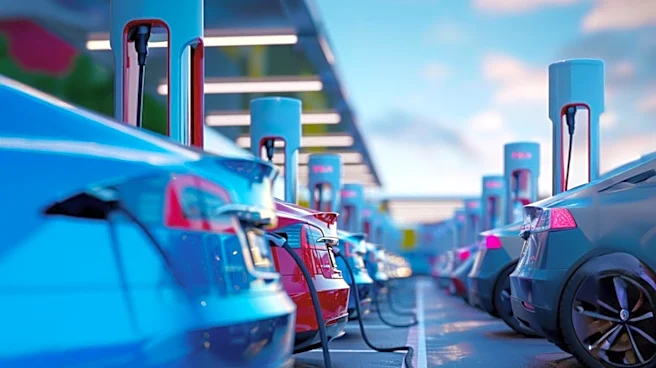
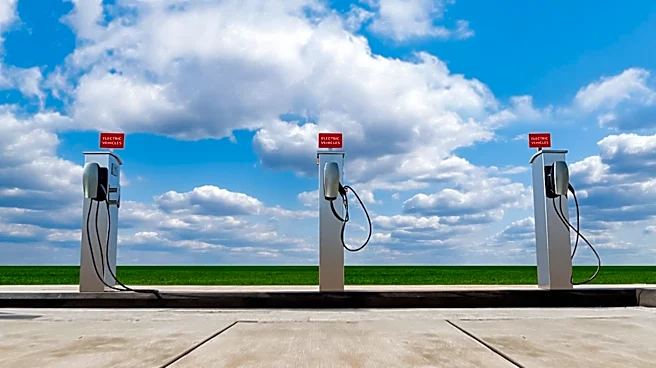
Survey, includes both fully electric vehicles and plug-in hybrids. Despite this high ranking, local hosts Gee Scott and Ursula Reutin of KIRO Newsradio discussed that the high cost of EVs, expensive tabs, insurance, and a perceived lack of charging infrastructure are significant barriers to broader adoption. King County, particularly Bellevue, shows a high concentration of Teslas, indicating a demographic and geographic skew in EV ownership. Homeowners in Washington are more than twice as likely as renters to own an EV, largely due to easier access to home charging.
Why It's Important?
Washington State's experience highlights a critical paradox in the U.S. EV transition: strong policy support and high adoption rates in certain demographics coexist with significant cost and infrastructure challenges for the broader population. The state has invested substantially in EV incentives, including a $45 million rebate program and $43 million in sales tax exemptions, with a new $5 million instant rebate program planned. However, the high upfront cost of EVs, coupled with ongoing expenses like tabs and insurance, deters many potential buyers. The disparity between homeowners and renters in EV ownership also points to an equity issue, as renters often lack convenient charging options. This situation underscores the need for comprehensive strategies that address not only vehicle affordability but also accessible charging solutions for all residents, regardless of housing type.
What's Next?
Washington State is preparing to launch a new $5 million EV instant rebate program in January 2027, aiming to further incentivize electric vehicle purchases. However, the ongoing debate among state officials and the public centers on whether to continue or re-evaluate these financial incentives, given the persistent cost barriers. Addressing the lack of charging infrastructure, especially for renters and in underserved areas, will be crucial for expanding EV adoption beyond affluent homeowners. The dominance of Tesla's charging network in the region suggests that other manufacturers and charging providers need to significantly expand their infrastructure to compete effectively. Future policies may need to focus on reducing the total cost of EV ownership and ensuring equitable access to charging to achieve widespread adoption across all demographics.
Beyond the Headlines
The discussion in Washington State reveals a deeper societal challenge in transitioning to electric vehicles: the intersection of technology, economics, and social equity. The concentration of Teslas in affluent areas like Bellevue and the disparity between homeowner and renter EV ownership underscore that the current EV market primarily serves higher-income demographics. This raises questions about the fairness and sustainability of current EV policies, which may inadvertently exacerbate existing economic inequalities. For a truly widespread and equitable EV transition, policymakers must consider innovative solutions that make EVs and charging infrastructure accessible and affordable for all income levels and housing situations, moving beyond a reliance on rebates that may not fully offset the high initial costs for many consumers.