





What's Happening?
The Sahel and West Africa Club (SWAC), in collaboration with the World Bank, has released new data focusing on Africa's changing climate. This initiative covers 28 African countries, which collectively account for approximately 73% of Africa's greenhouse
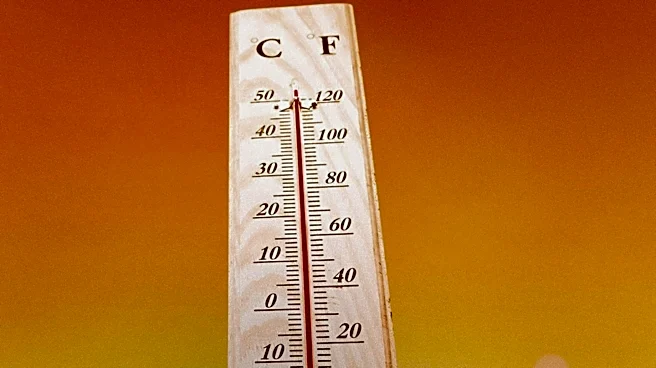
gas (GHG) emissions. The report aims to address a significant gap in foundational climate data for the continent. It details how African nations and cities are exposed to major climate-related hazards, such as extreme heat, and assesses their readiness for adaptation. Furthermore, the report outlines the climate mitigation policy landscape across these African countries, highlighting key policy trends. This groundbreaking work utilizes novel datasets and robust methodologies developed by organizations including the Organisation for Economic Co-operation and Development (OECD) and the Global Green Growth Institute (GGGI). A notable limitation identified is the current absence of a harmonized global methodology for cataloging national adaptation policies, making a comprehensive cross-country comparison for adaptation less feasible than for mitigation.
Why It's Important?
This collaborative effort between SWAC and the World Bank is crucial for understanding and addressing climate change impacts in Africa, a continent highly vulnerable to climate-related risks despite contributing only 4% of global energy-related GHG emissions. The detailed data on climate hazards and adaptation readiness will enable more informed policy-making and resource allocation for climate resilience. By mapping the mitigation policy landscape, the report provides a baseline for tracking progress and identifying areas for improvement in reducing emissions. The insights gained can guide international aid and investment, ensuring that support is directed to the most vulnerable regions and effective mitigation strategies. For U.S. foreign policy and development agencies, this data offers a clearer picture of climate challenges in a critical region, potentially influencing aid programs, diplomatic engagements, and partnerships aimed at fostering stability and sustainable development in Africa. The report also highlights the need for standardized adaptation policy frameworks, which could spur international cooperation in developing such methodologies.
What's Next?
The report flags the absence of a harmonized global methodology for cataloging national adaptation policies as a priority for future work. This indicates a potential push for international organizations and research bodies to develop such a framework, which would significantly enhance the ability to compare and evaluate adaptation efforts across countries. Future initiatives will likely focus on building upon these novel datasets to further refine climate risk assessments and policy recommendations. Stakeholders, including governments, international organizations, and civil society groups, are expected to use this data to inform their climate strategies and advocate for more effective climate action. The findings may also stimulate further research into specific climate vulnerabilities and innovative adaptation solutions tailored to the African context. Continued collaboration between SWAC, the World Bank, and other partners will be essential to translate these findings into tangible policy changes and on-the-ground interventions.
Beyond the Headlines
The report's emphasis on Africa's disproportionate vulnerability to climate change, despite its minimal contribution to global emissions, underscores a significant ethical dimension of climate justice. It highlights the imperative for developed nations, including the U.S., to support climate adaptation and mitigation efforts in Africa, not just as a matter of aid, but as a shared global responsibility. The lack of a harmonized methodology for adaptation policies points to a broader challenge in global climate governance: the difficulty in standardizing approaches to complex, localized environmental issues. This could lead to a long-term shift towards more regionally tailored climate strategies, moving beyond one-size-fits-all solutions. Furthermore, the data collection and analysis process itself could foster greater scientific and technical capacity within African nations, promoting self-reliance in climate research and policy development. This initiative could also influence global climate negotiations by providing concrete data to support calls for increased financial and technological transfers to vulnerable countries.