
What's Happening?
Permits for cutting Christmas trees in several U.S. national forests are now available for purchase online through Recreation.gov. This initiative allows the public to engage in a holiday tradition while
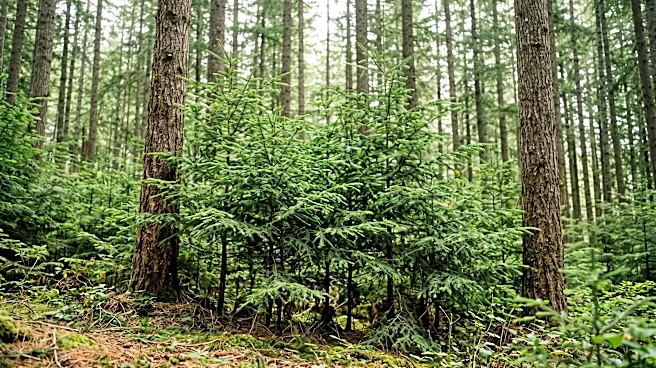
also contributing to forest health. National forest officials state that the permit system aids in thinning densely populated stands of small-diameter trees, which are often ideal for Christmas trees. This practice helps other trees grow larger and creates open areas that provide forage for wildlife. Specific national forests participating include Ottawa, Hiawatha, and Chequamegon-Nicolet in Wisconsin and Michigan's Upper Peninsula. Permits typically cost $5, with limits on the number of trees per household set by each forest. Fourth graders with an Every Kid Outdoors pass are eligible for a free Christmas tree permit, though a $2.50 reservation fee applies. Visitors must create or log into a Recreation.gov account to complete the transaction and are advised to carefully review specific cutting areas, dates, and tree types before purchasing.
Why It's Important?
This program is significant as it balances public recreational enjoyment with critical forest management objectives. By allowing the public to harvest Christmas trees, the U.S. Forest Service effectively utilizes a community-driven approach to forest thinning. This active management is crucial for reducing the risk of wildfires, improving overall forest ecosystem health, and enhancing wildlife habitats. The removal of smaller, overcrowded trees reduces competition for resources like water and sunlight, allowing remaining trees to thrive. Furthermore, the program fosters a connection between citizens and national forests, promoting environmental stewardship and education, especially among younger generations through initiatives like the Every Kid Outdoors pass. The nominal fee for permits also contributes to the operational costs of managing these vast public lands, ensuring their long-term sustainability.
What's Next?
As the holiday season approaches, the U.S. Forest Service will continue to process permit applications and provide guidance to individuals participating in the Christmas tree cutting program. Forest officials will monitor designated cutting areas to ensure compliance with regulations and to assess the effectiveness of the thinning efforts. The program is expected to continue annually, with potential adjustments based on forest health assessments and public participation rates. Future efforts may include expanding the program to more national forests or refining the permit system to further optimize forest management goals. Public engagement and adherence to guidelines will be key to the ongoing success of this initiative, which supports both ecological balance and cherished holiday traditions.
Beyond the Headlines
Beyond the immediate benefit of obtaining a Christmas tree, this program highlights a broader shift in forest management strategies that increasingly involve public participation. It underscores the concept of 'working forests,' where sustainable resource extraction, even on a small scale, contributes to ecological health rather than detracting from it. This approach can help demystify forest management for the public, illustrating how human interaction, when properly regulated, can be a tool for conservation. Ethically, it promotes responsible engagement with natural resources and educates participants on the ecological benefits of thinning. Culturally, it reinforces a tradition that connects families with nature, potentially fostering a deeper appreciation for public lands and the importance of their stewardship for future generations.