

What's Happening?
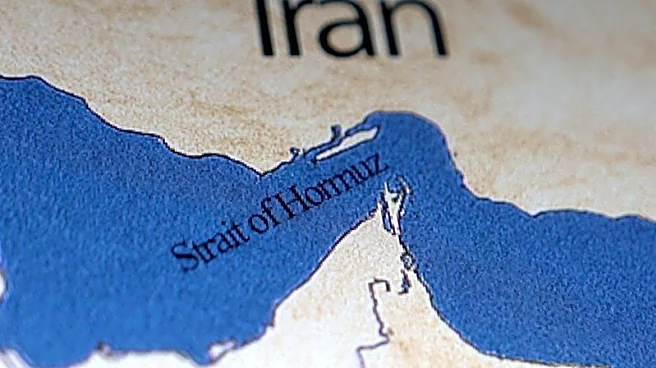
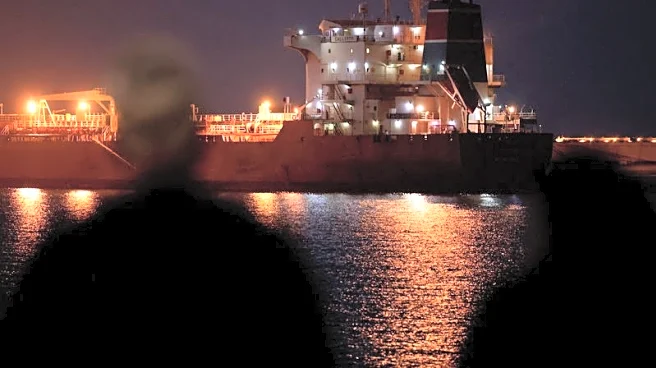
Sultan al Jaber, the UAE Minister of Industry and Advanced Technology and CEO of ADNOC, has accused Iran of committing global economic warfare by taking control of the Strait of Hormuz. This strategic waterway is crucial for global oil shipments, and Iran's
actions have escalated tensions in the region. The accusation comes as the conflict with Iran intensifies, with potential implications for global oil markets and economic stability.
Why It's Important?
The Strait of Hormuz is a vital chokepoint for the global oil supply, with a significant portion of the world's oil passing through it. Iran's control over this passage poses a threat to global energy security and could lead to increased oil prices and economic instability. The accusation of economic warfare highlights the broader geopolitical implications of the conflict, as countries reliant on oil imports may face economic challenges. The situation underscores the interconnectedness of global markets and the potential for regional conflicts to have widespread economic impacts.
What's Next?
The international community may seek to address the situation through diplomatic channels to ensure the free flow of oil through the Strait of Hormuz. However, if tensions continue to escalate, there could be calls for military intervention to secure the waterway. The outcome of this situation will be closely monitored by global markets, as any disruption to oil supplies could have significant economic consequences.