









What's Happening?
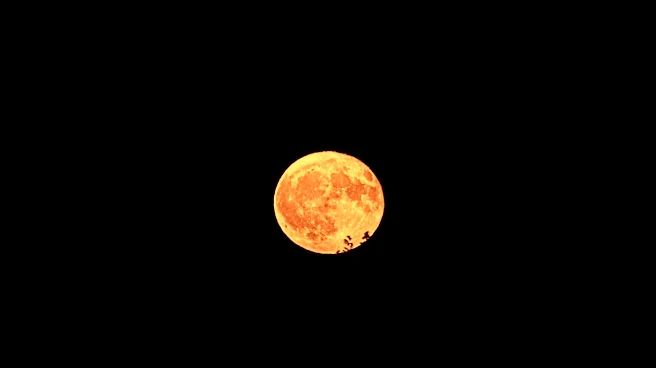
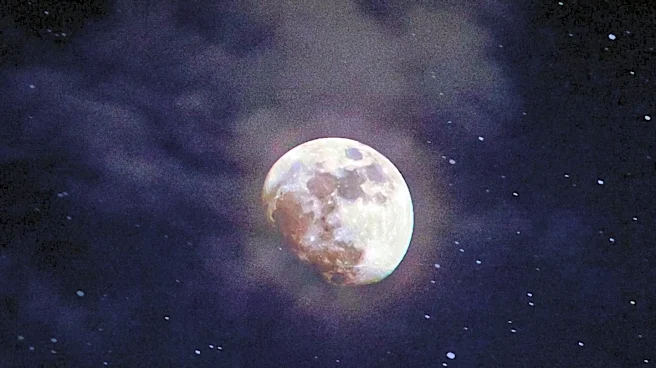
The Strawberry Moon, the first full moon of the summer season, is set to rise in the UK skies in the coming days. According to the Royal Observatory Greenwich, it will reach its peak in the early hours of Tuesday, 30 June. However, for those hoping to catch
a glimpse at a more convenient time, the moon will appear full in the nighttime sky on Monday, 29 June, and the following evening. The Strawberry Moon is named after the harvest season observed by indigenous Americans, marking the time when wild strawberries were harvested. Despite its name, the moon does not appear pink or red. This full moon is unique as it is the lowest-hanging in the sky in the northern hemisphere, creating a phenomenon known as the Moon illusion, where the moon appears larger when closer to the horizon.
Why It's Important?
The appearance of the Strawberry Moon is significant as it marks the beginning of the summer season in the northern hemisphere. This celestial event is a reminder of the cultural and historical practices of indigenous Americans, who named the moon based on the seasonal changes and agricultural cycles. The Moon illusion phenomenon also provides an opportunity for educational discussions about astronomy and the perception of celestial bodies. For astronomers and sky enthusiasts, the Strawberry Moon offers a chance to observe and photograph the moon under unique conditions, contributing to public interest in astronomy and natural phenomena.
What's Next?
Following the Strawberry Moon, there will be two more full moons during the meteorological summer. The Buck Moon, named after the time male deer sprout new antlers, will rise on 29 July. This will be followed by the Sturgeon Moon on 28 August, named after the freshwater fish caught by Native Americans in the Great Lakes. These upcoming celestial events continue to offer opportunities for skywatchers and photographers to engage with the night sky and explore the cultural significance of these lunar names.
Beyond the Headlines
The naming of full moons, such as the Strawberry Moon, reflects the deep connection between human cultures and the natural world. These names serve as a historical record of how indigenous peoples tracked time and seasons, highlighting the importance of understanding and preserving cultural heritage. Additionally, the Moon illusion phenomenon challenges our perception of size and distance, offering insights into human cognition and the ways we interpret visual information.