


What's Happening?
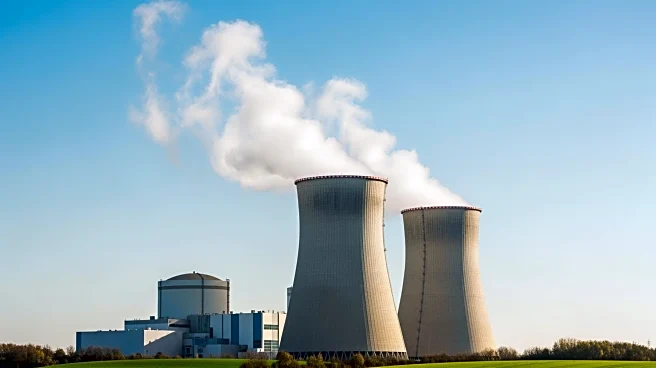
The International Atomic Energy Agency (IAEA) has reported significant trends in nuclear power generation, emphasizing its role in providing low-carbon, reliable electricity as countries strive for net-zero emissions. Currently, there are 416 nuclear reactors
in operation worldwide, contributing 376 gigawatts of electrical capacity. Additionally, 63 reactors are under construction, which could add over 66 gigawatts of capacity. The IAEA projects that global nuclear capacity could double by 2050, potentially reaching 992 gigawatts. This growth is driven by the increasing demand for zero-emission base load power and the need to meet rising electricity demands. Countries like Egypt and Türkiye are entering the nuclear energy sector, while non-electric uses of nuclear energy, such as heating and desalination, are expanding, particularly in China and Russia.
Why It's Important?
The expansion of nuclear power is crucial for achieving global climate goals, as it offers a stable and low-carbon energy source. This shift is significant for countries aiming to reduce their carbon footprints while meeting growing energy demands. The development of new nuclear plants and the extension of existing reactors' lifespans, especially in the U.S. and Japan, highlight the strategic importance of nuclear energy in the global energy mix. The anticipated increase in uranium demand could lead to higher prices, impacting the global uranium market and encouraging further investment in uranium mining and processing. This trend also underscores the geopolitical implications of nuclear energy, as countries seek to secure energy independence and reduce reliance on fossil fuels.
What's Next?
As nuclear power becomes more integral to global energy strategies, countries will likely continue to invest in nuclear infrastructure and technology. The construction of new reactors and the development of small modular reactors (SMRs) are expected to accelerate. Additionally, the focus on non-electric applications of nuclear energy may lead to innovations in sectors like industrial heating and water desalination. The global uranium market is poised for growth, with potential supply deficits driving exploration and development of new uranium resources. Policymakers and industry leaders will need to address regulatory, safety, and environmental concerns to ensure the sustainable expansion of nuclear energy.
Beyond the Headlines
The resurgence of nuclear power raises important ethical and environmental considerations. While nuclear energy offers a low-carbon alternative, issues such as nuclear waste management, safety risks, and the potential for nuclear proliferation remain critical challenges. The development of advanced nuclear technologies, including SMRs, could mitigate some of these concerns by offering safer and more efficient solutions. Furthermore, the integration of nuclear power into national energy policies will require careful balancing of economic, environmental, and social factors to ensure equitable and sustainable energy access.