








What's Happening?
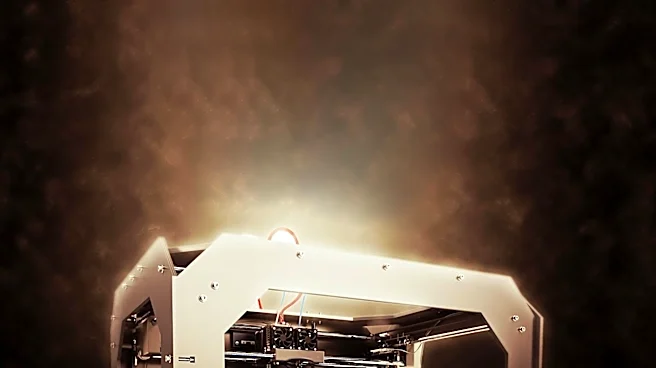
Technology inspired by 3D printing is being implemented in hospitals and specialized pharmacies to create personalized medicines. This approach allows for the production of medications with doses specifically tailored to individual patients, addressing
a critical need for groups such as children and older patients who often require dosages not available in standard commercial products. The system utilizes a 3D printing-inspired manufacturing process to dispense precise amounts of a gel-like formulation, enabling pharmacists to produce patient-specific treatments while maintaining consistent quality. Research conducted by Mahsa Bahman at Åbo Akademi University investigated the efficacy of this technology in manufacturing a wide range of personalized medicines, evaluating factors like dose accuracy, product quality, stability, and consistency, and its performance within a hospital pharmacy environment. This innovation aims to improve dosing accuracy and broaden access to customized treatments.
Why It's Important?
This advancement in personalized medicine holds significant implications for patient care in the U.S. and globally. Many existing medicines are produced in standard doses, which can be problematic for patients with unique treatment needs, leading to difficulties in accurate dosing when health care professionals or caregivers have to split tablets or adapt existing medications. The ability to precisely tailor doses can enhance treatment effectiveness and safety, particularly for vulnerable populations like children, who often require specific strengths not commercially available. Furthermore, this technology could benefit older patients whose medication needs evolve, individuals with rare diseases requiring specialized dosages, and hospital patients needing frequent dose adjustments. It also offers a potential solution during medicine shortages by enabling the customized production of necessary drugs, thereby improving patient access and potentially reducing medication errors associated with manual dose adjustments.
What's Next?
The ongoing integration of this 3D printing-inspired technology into hospital and specialized pharmacy settings suggests a future where personalized medicine becomes more accessible and commonplace. Further research and development will likely focus on expanding the range of medications that can be produced using this method and optimizing the manufacturing process for greater efficiency and scalability. The collaboration between academic research, such as Bahman's doctoral thesis, and industry, exemplified by CurifyLabs, indicates a pathway for translating scientific advancements into practical healthcare solutions. This trend could lead to broader adoption across healthcare systems, potentially influencing regulatory frameworks for customized drug production and fostering new models of pharmaceutical manufacturing that prioritize individual patient needs over mass production.
Beyond the Headlines
The shift towards personalized medicine, facilitated by technologies like 3D printing, represents a deeper transformation in healthcare philosophy. It moves beyond a 'one-size-fits-all' approach to drug therapy, emphasizing individual biological and physiological differences. This paradigm shift could lead to more effective treatments with fewer side effects, as medications are precisely matched to a patient's unique requirements. Ethically, it raises questions about equitable access to such advanced, customized treatments and the potential for disparities if these technologies are not widely adopted or are cost-prohibitive. Legally, it may necessitate new regulations for the manufacturing and dispensing of personalized drugs, ensuring safety and quality control in a decentralized production model. Culturally, it could empower patients and healthcare providers with greater control over treatment plans, fostering a more collaborative and patient-centric healthcare environment.