





What's Happening?
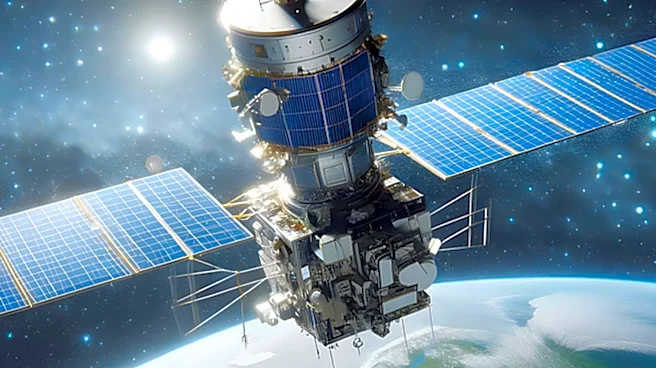
The European Union is set to launch its own satellite constellation, IRIS², as part of its efforts to enhance space capabilities and reduce reliance on American technology. The constellation will consist of 348 satellites, primarily in low-Earth orbit,
with some in medium-Earth orbit. This initiative aims to provide a backup communication system in case of disruptions and to strengthen Europe's position in the space sector. The project is led by the SpaceRISE consortium, which includes European companies SES, Eutelsat, and Hispasat.
Why It's Important?
The launch of IRIS² represents a significant step for Europe in asserting its independence in space technology and infrastructure. By developing its own satellite network, Europe aims to enhance its security and communication capabilities, reducing dependency on external providers like SpaceX. This move reflects a broader trend of nations seeking to establish sovereign space capabilities amidst geopolitical tensions. The project also highlights the challenges and complexities of international collaboration in space, as European countries work together to fund and implement the constellation.
What's Next?
As the IRIS² project progresses, Europe will need to address technical and regulatory challenges to ensure the successful deployment and operation of the constellation. The initiative may lead to increased competition in the global satellite market, prompting other regions to enhance their space capabilities. The success of IRIS² could pave the way for further European investments in space technology and infrastructure, potentially leading to new opportunities for collaboration and innovation in the sector.