


What's Happening?
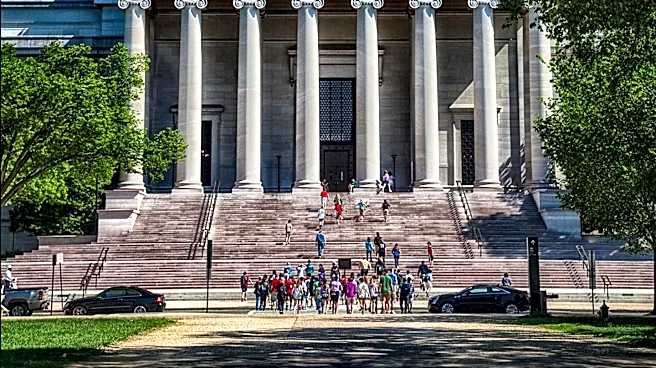
The National Gallery of Art (NGA), situated on the National Mall in Washington, D.C., is a prominent art museum globally. It is dedicated to preserving, collecting, and exhibiting art from various periods and continents, boasting a permanent collection
of over 160,000 works, including paintings, drawings, photographs, sculptures, and multimedia installations. The NGA campus comprises three sites: the West Building, the East Building, and the Sculpture Garden. The West Building primarily houses historical art, including European paintings and sculptures from the 13th century and major American artworks. The East Building, designed by I.M. Pei, focuses on modern and contemporary art, featuring works by artists such as Alexander Calder, Barbara Kruger, and Pablo Picasso. The museum also hosts a variety of public programs throughout the year, such as concerts, guided tours, lectures, and special events like the NGA Evenings. A notable permanent installation, 'Multiverse' by Leo Villareal, connects the West and East Buildings with a luminous passage of over 41,000 LED modules.
Why It's Important?
The National Gallery of Art plays a crucial role in the cultural landscape of the United States by making world-class art accessible to the public free of charge. Its extensive collection, spanning centuries and diverse artistic movements, serves as a significant educational resource for students, researchers, and art enthusiasts. The museum's commitment to showcasing both historical masterpieces and contemporary works ensures a comprehensive understanding of art history and its ongoing evolution. By offering a wide array of public programs, the NGA fosters community engagement and promotes art appreciation, contributing to the intellectual and cultural enrichment of Washington, D.C., and the nation. The presence of such a prestigious institution on the National Mall reinforces the capital's status as a center for arts and culture, attracting both domestic and international visitors and supporting the local tourism economy.
What's Next?
The National Gallery of Art will continue its mission of preserving and exhibiting art while offering a dynamic schedule of temporary exhibitions and public events. Visitors can anticipate ongoing opportunities to explore distinctive artists across various mediums, from Renaissance masters to modern wonders. The museum's calendar will feature a rich and varied program, including concerts, guided tours, and lectures, with popular events like NGA Evenings expected to continue. The Sculpture Garden, which transforms into an ice rink in winter, will also remain a key attraction, offering seasonal activities. The NGA encourages visitors to consult its official calendar for current exhibition schedules and event timings, ensuring they can plan their visits to experience the full breadth of its offerings.
Beyond the Headlines
Beyond its role as a repository of art, the National Gallery of Art serves as a cultural anchor, reflecting and shaping national identity through its collections and programming. The juxtaposition of the classical West Building and the modernist East Building, connected by Villareal's 'Multiverse,' symbolizes the museum's embrace of both tradition and innovation. This architectural and artistic dialogue encourages visitors to consider the continuous evolution of art and its relevance across different eras. The museum's free admission policy underscores a democratic ideal, making art accessible to all, regardless of socioeconomic status. This accessibility is vital for fostering a more art-literate and culturally engaged populace, contributing to broader societal discussions about aesthetics, history, and human expression. The NGA's efforts to preserve and interpret art from diverse cultures also promote a deeper understanding of global heritage within a national context.