





What's Happening?
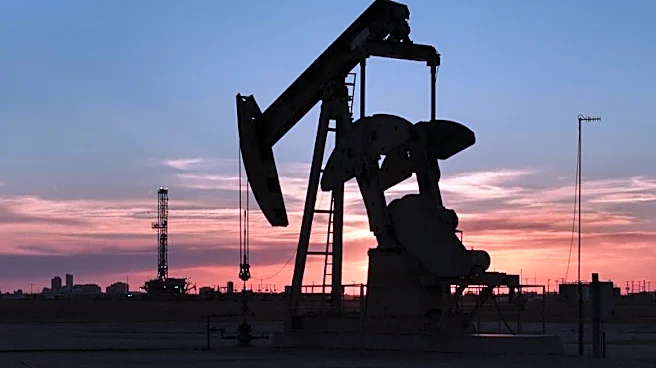
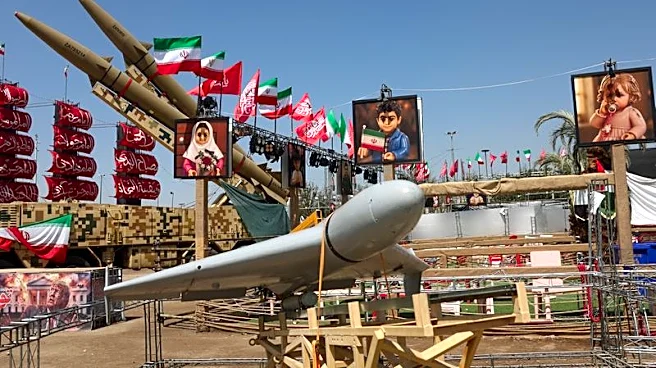
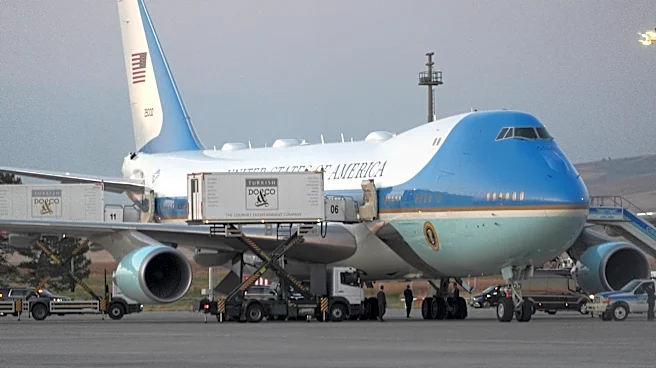
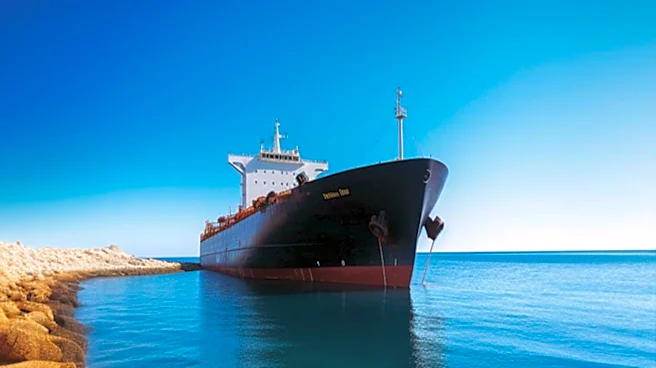
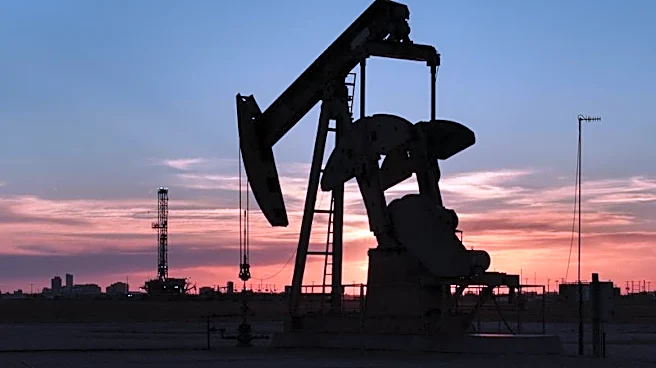
President Trump has claimed that the U.S. Navy has '100%' control of the Strait of Hormuz, a critical waterway for global oil transport. Despite this assertion, oil prices continue to rise, with U.S. crude and Brent crude both experiencing significant
increases. The lack of an agreement between Tehran and Washington has contributed to market uncertainty, with experts warning that prolonged deadlock could lead to more volatile market movements. The situation highlights the geopolitical tensions affecting global oil supply and market stability.
Why It's Important?
The Strait of Hormuz is a vital chokepoint for global oil shipments, and any disruption can have significant implications for oil prices and market stability. President Trump's claim of control is met with skepticism, as the ongoing geopolitical tensions continue to drive oil prices higher. This situation underscores the interconnectedness of geopolitical events and economic markets, with potential impacts on energy prices, inflation, and economic growth. The uncertainty surrounding the Strait of Hormuz could lead to increased volatility in global markets.
What's Next?
Market analysts will closely watch for any developments in U.S.-Iran relations that could impact the Strait of Hormuz and oil prices. The potential for a diplomatic resolution remains uncertain, and prolonged tensions could exacerbate market volatility. Investors and policymakers will need to navigate these uncertainties, balancing geopolitical risks with economic strategies. The situation may also prompt discussions on energy security and diversification of supply sources.