






What's Happening?
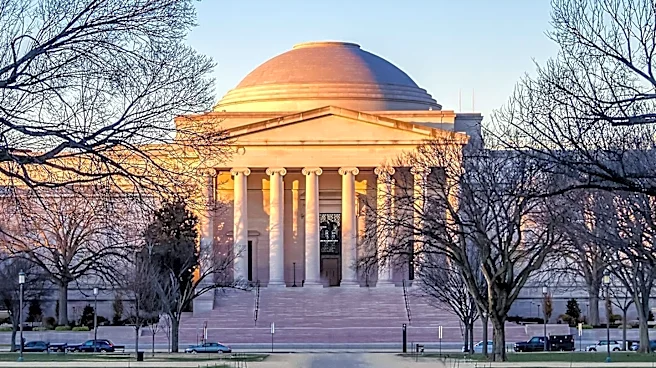
The National Gallery of Art (NGA) in Washington, D.C., has received a positive assessment for its Jewish and Israeli representation, according to a recent report by the Anti-Defamation League (ADL). The ADL's 'State of the Arts' initiative evaluated 40
leading U.S. art museums across categories including policies, art and artist representation, and programming. The NGA, located on the National Mall, houses over 160,000 works spanning Western art history. Its collection is noted for a 'major strength' in Jewish and Israeli representation, featuring numerous Jewish artists, Jewish-themed works, Holocaust-related materials, and Israeli artists. The museum also holds archives from the Munich Central Collecting Point, which was instrumental in documenting and redistributing Nazi-confiscated art. While the NGA offers some Jewish educational programming, such as discussions around documentaries and talks with Jewish artists, the report indicates that its direct partnerships with Jewish institutions are 'comparatively limited.' The museum maintains 'strong content-neutral rules' regarding protests and demonstrations and provides staff with anti-discrimination training, though it does not specifically name antisemitism in its policies.
Why It's Important?
This report is significant as it highlights the efforts of a major U.S. cultural institution in addressing representation and inclusion, particularly concerning Jewish and Israeli communities, in a post-October 7 cultural landscape where concerns about their treatment have been raised. The ADL's assessment provides a benchmark for other museums, emphasizing the importance of diverse representation in art and programming. The NGA's 'good showing' suggests that its existing collections and historical engagement, such as its Holocaust-related archives, position it as a potential leader in Jewish inclusion. However, the identified areas for improvement, such as the need for more direct Jewish partnerships and explicit language prohibiting antisemitism, underscore ongoing challenges in ensuring comprehensive and visible support for all communities within cultural institutions. This evaluation can influence how museums nationwide review their policies, collections, and community engagement strategies to better reflect and support diverse cultural identities.
What's Next?
The ADL report suggests that the National Gallery of Art has the capacity to further enhance its leadership in Jewish inclusion. Recommendations include establishing more direct partnerships with Jewish institutions, incorporating explicit language prohibiting antisemitism into its policies, and implementing a visible reporting mechanism for bias incidents. These steps would align the NGA's policies and community engagement more closely with the strength of its existing representation and provenance work. The report's findings may prompt the NGA and other museums to review and potentially revise their internal standards and programming to address these recommendations. Such actions could lead to a more inclusive environment within the art community, fostering stronger relationships with diverse cultural groups and ensuring that all communities feel represented and respected within national cultural institutions.
Beyond the Headlines
The ADL's 'State of the Arts' report delves into the deeper implications of 'erasure by omission' within American cultural life, particularly concerning Jewish and Israeli artists. The finding that only one of 40 museums recognized Jewish American Heritage Month in 2026, despite 60% recognizing other heritage months, points to a systemic issue beyond individual museum collections. This disparity highlights a broader cultural challenge in acknowledging and celebrating Jewish contributions to American society. The report implicitly calls for a re-evaluation of how cultural institutions prioritize and integrate diverse heritage months and communities into their annual programming. The NGA's strong content-neutral rules on protests, while important for maintaining order, also raise questions about the balance between free expression and the explicit condemnation of specific forms of discrimination like antisemitism within institutional policies. This ongoing dialogue will shape the ethical and cultural responsibilities of museums in fostering inclusive and equitable environments.