



What's Happening?
The Thailand Institute of Scientific and Technological Research (TISTR) recently hosted a delegation from Kunming University of Science and Technology (KUST) from China to explore collaboration in smart agricultural technology and related research areas.
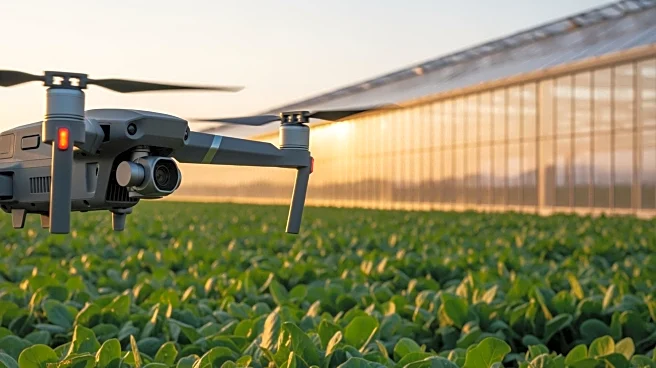
The visit aimed to strengthen international research partnerships and advance innovation in agriculture. Key discussions focused on smart farming solutions, agricultural engineering, and sustainable crop production. The KUST delegation toured TISTR's advanced facilities, including laboratories for tissue culture, post-harvest processes, and soil analysis. Demonstrations of IoT-enabled sensors and smart irrigation systems were also showcased, highlighting Thailand's capabilities in technology-driven agriculture. Both countries are committed to fostering innovation and sharing expertise to drive sustainable agricultural development.
Why It's Important?
This collaboration between Thailand and China is significant as it represents a concerted effort to address future agricultural challenges through innovation and technology. By focusing on smart agricultural technologies, both countries aim to enhance productivity and sustainability in farming practices. The partnership is expected to accelerate the adoption of new technologies, benefiting farming communities in both nations. Additionally, the collaboration serves as a model for other ASEAN countries, emphasizing the importance of regional cooperation in achieving sustainable agricultural systems. The initiative also highlights the potential for commercializing new agricultural machinery and digital tools, which could have a positive impact on the agricultural sector's economic growth.
What's Next?
The ongoing collaboration is expected to lead to joint research projects that could pave the way for the commercialization of new agricultural technologies. Both countries are also focusing on developing human resources for smart agriculture, as evidenced by the recent seminar on smart agricultural technology and talent development. This seminar, part of a Memorandum of Understanding between KUST, King Mongkut's University of Technology Thonburi, and TISTR, serves as a platform for knowledge exchange and skill development. Future initiatives may include further integration of AI and satellite imagery for crop monitoring and yield improvement, reinforcing the commitment to innovation and sustainable growth in the agricultural sector.
Beyond the Headlines
The collaboration between Thailand and China in smart agriculture not only addresses immediate agricultural challenges but also has broader implications for regional food security and rural community development. By integrating advanced technologies such as AI and IoT in agriculture, both countries are setting a precedent for modernizing traditional farming practices. This shift towards technology-driven agriculture could lead to long-term improvements in crop yields, resource efficiency, and environmental sustainability. Additionally, the focus on talent development and skill enhancement in smart agriculture is crucial for building a workforce capable of supporting these technological advancements, ultimately contributing to the economic and social well-being of rural communities.