


What's Happening?
Former President Bidya Devi Bhandari has been appointed as a senior leader within the CPN-UML party, ranking second only to Chairman KP Sharma Oli. This decision, made by the Central Committee on Ashoj 8, involved amending the party's statute to grant
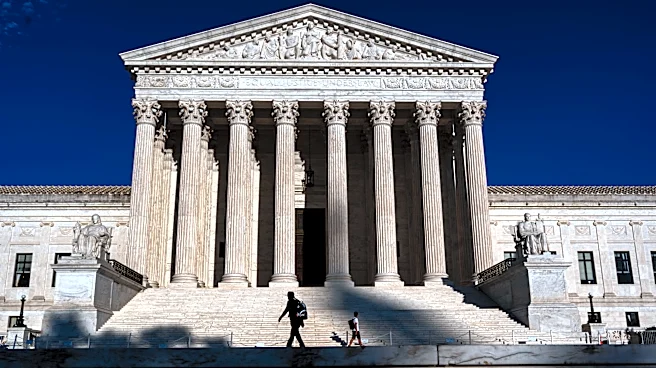
her the right to participate in meetings of the Central Committee, Politburo, Standing Committee, and Secretariat. Bhandari, who served as Nepal's first female President from 2072 BS to 2079 BS, announced her return to party politics on Ashad 14 last year. Her return to active party politics has sparked debate among constitutional law experts, as the institution of the President is considered a symbol of the republic, and a ceremonial president returning to active politics is seen as being against tradition and practice. While the Constitution of Nepal is silent on whether former presidents or vice-presidents can return to active politics, the issue is being framed as one of moral and positional dignity rather than a constitutional matter. Bhandari's tenure as President was marked by controversy, including her unconstitutional dissolution of parliament in 2077 and 2078 BS at Oli's recommendation, which was later overturned by the Supreme Court.
Why It's Important?
The appointment of former President Bidya Devi Bhandari as a senior leader in the CPN-UML carries significant implications for Nepal's political landscape and constitutional norms. Her return to active party politics, particularly after a controversial presidency, challenges the established understanding of the Head of State's role as a neutral and ceremonial figure. This move could set a precedent for future former presidents and vice-presidents to re-enter partisan politics, potentially undermining the dignity and impartiality of these high offices. The debate surrounding her return highlights a gap in Nepal's constitution regarding the post-presidency roles of former heads of state, forcing a re-evaluation of moral and ethical boundaries in political conduct. Furthermore, given her past actions, such as the unconstitutional dissolution of parliament at the behest of then-Prime Minister Oli, her re-entry into a prominent party role could reignite concerns about political influence and adherence to constitutional principles. This development could also impact public trust in political institutions and the perceived independence of the presidency.
What's Next?
The immediate future will likely see continued debate and scrutiny over former President Bhandari's role within the CPN-UML and the broader implications for Nepal's political system. Constitutional experts and civil society groups may push for clearer legal frameworks or constitutional amendments to address the re-entry of former heads of state into active politics. The CPN-UML's decision to amend its statute to accommodate Bhandari suggests a strategic move by Chairman Oli, potentially to consolidate power or leverage her influence within the party. This could lead to internal party dynamics shifting, especially given past opposition within the UML regarding her return. Public opinion and media coverage will play a crucial role in shaping the narrative around this development. The actions of other political parties and leaders, particularly those who have maintained a dignified public life after leaving high office, will also be observed as a contrast to Bhandari's decision. The long-term impact will depend on how this precedent influences future political figures and whether it leads to a formal re-evaluation of the roles and responsibilities of former presidents in Nepal.
Beyond the Headlines
Beyond the immediate political maneuvering, the return of former President Bidya Devi Bhandari to active party politics touches upon deeper ethical and cultural dimensions within Nepal's governance. The concept of a Head of State, even a ceremonial one, is often imbued with a sense of national unity and impartiality, transcending partisan divides. Her re-entry into the CPN-UML challenges this ideal, potentially blurring the lines between national leadership and party loyalty. This situation could foster a culture where high office is seen as a temporary pause in a political career rather than a culmination, diminishing the perceived sanctity and neutrality of the presidency. It also raises questions about accountability for past actions, particularly her role in the unconstitutional dissolution of parliament. The public's perception of justice and fairness could be affected if individuals involved in such controversies are seen to seamlessly transition back into positions of power without clear mechanisms for addressing past conduct. This development could also influence the political aspirations of women in leadership, as Bhandari's legacy, both as the first female President and now as a re-engaged party leader, will be closely watched and debated.