







What's Happening?
Effective January 1, 2027, the Chattahoochee-Oconee National Forest will require all overnight campers on the Appalachian National Scenic Trail (A.T.) in Georgia to use bear-resistant canisters. This new regulation, outlined in Forest Order 00-26-02,
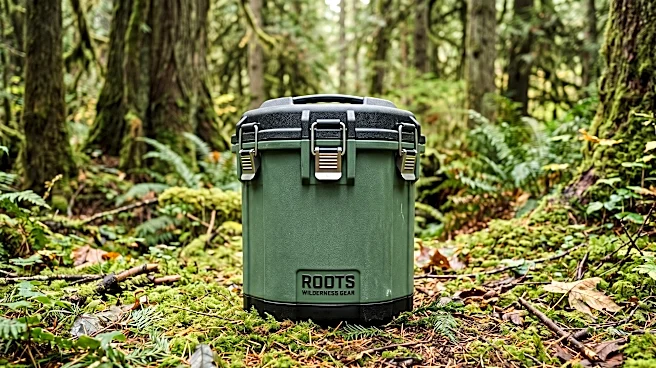
applies to the entire 78 miles of the A.T. in Georgia, including the A.T. Approach Trail, and extends one-half mile on each side of the trail. The mandate covers all dispersed camping within this corridor, including A.T. shelters, and is a year-round requirement. Campers must store all food, food containers, garbage, and toiletries in commercially manufactured, solid, non-pliable bear-resistant canisters. This measure is a direct response to increasing public safety concerns and repeated human-bear conflicts in the area, as stated by Forest Supervisor Judy Toppins. The Appalachian Trail Conservancy (ATC) notes that over 12% of bear encounter reports on the A.T. in the last decade have occurred in Georgia, despite the state hosting only 3.5% of the trail.
Why It's Important?
This new regulation is significant for both public safety and wildlife conservation in the Chattahoochee-Oconee National Forest. The increasing number of human-bear conflicts, often stemming from bears associating human campsites with easy food sources, poses a threat to both hikers and the bear population. Bears that become habituated to human food can become aggressive and may ultimately need to be euthanized. By mandating bear canisters, the Forest Service aims to break this cycle, ensuring that bears remain wild and do not rely on human provisions. This policy also provides a consistent approach to food storage, as traditional methods like food hangs have proven ineffective against increasingly adept bears. The measure is expected to enhance the safety of the over half a million annual visitors to the A.T. in Georgia, including thousands of thru-hikers, while protecting the state's healthy black bear population, which was nearly eradicated in the 1930s.
What's Next?
Starting January 1, 2027, overnight campers on the Appalachian Trail in Georgia will need to acquire and properly use qualifying bear-resistant canisters. The Chattahoochee-Oconee National Forest, in coordination with Appalachian Trail management partners like the Appalachian Trail Conservancy and the Georgia Appalachian Trail Club, will be working to enhance hiker knowledge on best practices for food storage. Visitors are advised to obtain a qualifying canister before their trip, ensure it can hold all necessary items, and follow manufacturer instructions for securing it. The Forest Service will likely focus on educating the public about the new requirements and the importance of bear-safe practices. This initiative could serve as a model for other national forests experiencing similar human-wildlife conflicts, potentially leading to broader adoption of bear canister mandates in other popular hiking areas across the U.S.
Beyond the Headlines
The mandatory bear canister policy highlights a broader challenge in managing human interaction with wildlife in national parks and forests. As outdoor recreation grows, so does the potential for conflicts with animals, particularly those attracted to human food. This regulation underscores the ethical responsibility of visitors to minimize their impact on natural ecosystems and protect wildlife. It also reflects a shift towards more proactive and stringent measures to preserve ecological balance and ensure visitor safety. The success of this program in Georgia could influence future policy decisions regarding wildlife management and visitor conduct in other protected areas, emphasizing the need for sustainable tourism practices that prioritize both human and animal well-being. The policy also implicitly acknowledges the intelligence and adaptability of bears, requiring more robust solutions than previously employed.