







What's Happening?
President Trump has issued a stern warning to France, threatening to impose 100% tariffs on French wines if the country does not eliminate its digital services tax on American tech companies. This tax, known as the GAFAM tax, imposes a 3% levy on the revenue
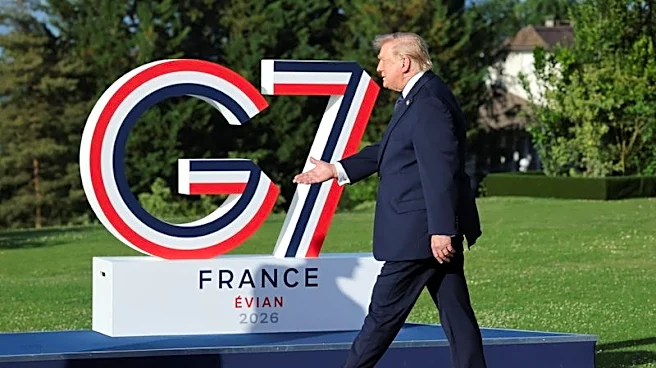
of major U.S. tech firms like Google, Amazon, and Apple. The tax has generated significant revenue for France, amounting to approximately $700 million last year. Trump’s ultimatum comes ahead of the G7 summit in Évian-les-Bains, where global trade and economic policies are set to be discussed. The French government, led by President Emmanuel Macron, has been under pressure to reconsider the tax, especially after the French National Assembly attempted to increase it to 6%, a move that was vetoed by ministers. Despite previous negotiations, the issue remains contentious, with the U.S. administration taking a firm stance against what it perceives as unfair taxation on American companies.
Why It's Important?
The potential imposition of 100% tariffs on French wines could significantly impact the French wine industry, which relies heavily on the American market for a substantial portion of its sales. This move could escalate into a broader trade conflict between the U.S. and France, affecting not only the wine industry but also other sectors involved in transatlantic trade. For U.S. tech companies, the digital tax represents a financial burden that could influence their operations and profitability in Europe. The situation underscores the ongoing tensions in international trade relations, particularly concerning digital taxation, which has been a point of contention between the U.S. and several European countries. The outcome of this dispute could set a precedent for how digital services are taxed globally, impacting international trade policies and economic relations.
What's Next?
The G7 summit presents an opportunity for further negotiations between the U.S. and France, as well as other member countries, to address the digital tax issue. The U.S. administration may continue to exert pressure on France to repeal the tax, potentially leveraging its influence within the G7 to gain support from other nations. If the tariffs are implemented, French winemakers and exporters will need to explore alternative markets or strategies to mitigate the impact on their business. Additionally, the U.S. may consider similar actions against other countries with digital taxes, further complicating international trade dynamics. The resolution of this dispute will likely influence future discussions on digital taxation and trade policies at both bilateral and multilateral levels.