
What's Happening?
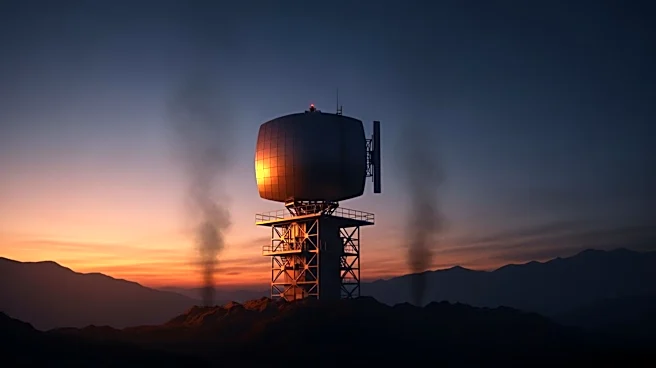
The United States military has launched self-defense strikes on Iranian radar and command sites in Goruk and Qeshm Island, following aggressive actions by Iran, including the downing of a U.S. MQ-1 drone
over international waters. The strikes, carried out over the weekend, targeted Iranian air defenses, a ground control station, and two attack drones that posed threats to ships in the region. Iran, in response, claimed to have targeted a U.S. airbase, although the specific location was not disclosed. The situation has escalated tensions in the region, with both sides exchanging military actions despite ongoing peace talks.
Why It's Important?
This development is significant as it highlights the fragile state of U.S.-Iran relations and the potential for further military escalation. The Strait of Hormuz, a critical shipping route for global oil supply, is at the center of these tensions, affecting global energy markets. The U.S. actions are aimed at protecting its assets and interests, while Iran's retaliatory measures underscore the ongoing conflict and the challenges in reaching a diplomatic resolution. The situation poses risks to regional stability and could impact international oil prices and global economic conditions.
What's Next?
The continuation of military exchanges between the U.S. and Iran could lead to further destabilization in the region. Diplomatic efforts are ongoing, with the U.S. seeking to negotiate a peace deal that addresses Iran's nuclear ambitions and regional activities. However, the potential for miscalculation or unintended escalation remains high, with both sides maintaining a posture of readiness for further conflict. The international community is likely to monitor the situation closely, given its implications for global security and economic stability.