






What's Happening?
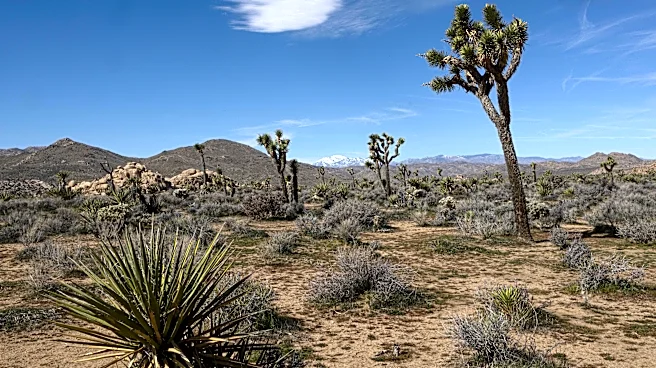
Joshua Tree National Park, located in Southern California, approximately 140 miles east of Los Angeles, 175 miles northeast of San Diego, and 215 miles southwest of Las Vegas, is a significant natural landmark. The park spans nearly 800,000 acres and was
designated a national monument in 1936 by President Franklin D. Roosevelt, later becoming a national park in 1994 under the California Desert Protection Act. It uniquely straddles two distinct ecosystems: the higher, cooler Mojave Desert, home to the iconic Joshua trees, and the lower Colorado Desert, characterized by ocotillo and 'jumping' cholla. The park is also renowned for its ancient granite boulder formations, which are over 100 million years old, and its location along the San Andreas Fault. Beyond its geological features, Joshua Tree is an International Dark Sky Park, offering exceptional stargazing opportunities, and is home to diverse wildlife, including 57 mammal species, 46 reptile species, and over 250 bird species. The land holds historical significance as the traditional homelands of the Maara'yam (Serrano), Nüwü (Chemehuevi), and Kawiya (Cahuilla) peoples.
Why It's Important?
Joshua Tree National Park serves as a vital ecological and recreational asset in the U.S., attracting visitors for its unique desert landscapes, rock climbing opportunities, and stargazing. Its designation as an International Dark Sky Park highlights its importance in preserving natural night skies, which are increasingly rare due to light pollution. The park's dual desert ecosystems provide a living laboratory for studying biodiversity and adaptation to arid environments, contributing to scientific research and conservation efforts. Economically, the park is a significant tourist draw for Southern California, supporting local businesses in nearby towns like Twentynine Palms, Palm Springs, and Yucca Valley through tourism, accommodation, and related services. The park's historical and cultural ties to indigenous communities also underscore its importance as a site of heritage and ongoing cultural relevance, promoting understanding of the region's original inhabitants.
What's Next?
Visitors planning trips to Joshua Tree National Park should be aware of optimal visiting seasons, with fall and spring offering the most comfortable temperatures. The park experiences high visitation during holidays, weekends from October to May, and spring break, necessitating early arrival or weekday visits to avoid crowds. There are no gas stations, restaurants, grocery stores, or hotels within the park, and cell service is limited, requiring visitors to bring all necessary supplies and download offline maps. Camping is popular, with most sites requiring reservations up to six months in advance, though some operate on a first-come, first-served basis. Rock climbing remains a popular activity, with various routes available for different skill levels. The park continues to offer ranger-led tours of Keys Ranch from October to April, providing insights into homesteading history.
Beyond the Headlines
The ecological balance within Joshua Tree National Park faces ongoing challenges, particularly concerning climate change impacts on its unique flora and fauna. The iconic Joshua trees, for instance, are vulnerable to changing climate patterns, which could affect their long-term survival and alter the park's namesake landscape. The park's status as an International Dark Sky Park also highlights a broader national and global issue of light pollution and the importance of preserving natural night environments for ecological health and human well-being. Furthermore, the park's management involves balancing conservation with increasing visitor numbers, raising questions about sustainable tourism practices and infrastructure development. The historical narrative of the park also prompts reflection on land use, indigenous rights, and the ongoing efforts to acknowledge and integrate the perspectives of the Maara'yam, Nüwü, and Kawiya peoples into its interpretation and management.