




What's Happening?
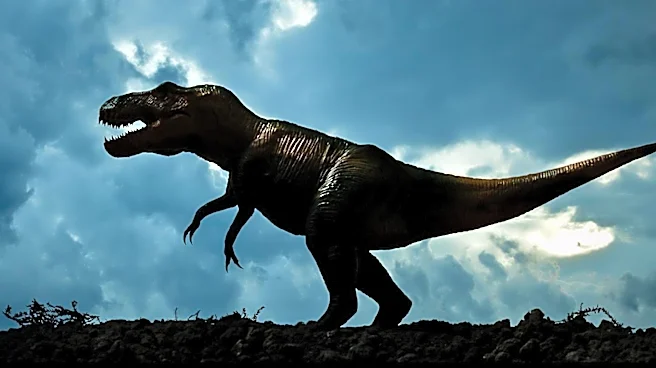
Scientists in North Dakota have unearthed what is believed to be the first known trackway left by an adult Tyrannosaurus rex. The discovery, made in the Hell Creek Formation of southwestern North Dakota on federal land, consists of at least four three-toed
prints stretching over 23 feet. These prints, each approximately 3 feet long, led researchers to conclude they were made by an adult T. rex. The identification was based on the prints' exceptional size, narrow toe shape, and the abundance of T. rex fossils in the surrounding area. While isolated footprints attributed to adult T. rex have been found before, this marks the first time a sequence of tracks, or trackway, has been described. The dinosaur is estimated to have been walking between 5 and 7 kilometers per hour when it left the tracks. The team used high-resolution 3D surface scanning to document the footprints, with lead author Peter Falkingham analyzing the data remotely. Further excavation revealed a fifth track, suggesting more may exist.
Why It's Important?
This discovery is significant for paleontology as it provides unprecedented insight into the locomotion and behavior of adult Tyrannosaurus rex. The trackway offers direct evidence of how these massive predators moved, complementing fossilized skeletal remains. Understanding the stride and estimated speed of the T. rex contributes to a more complete picture of its predatory capabilities and ecological role during the late Cretaceous period. The potential for preserved skin impressions within the tracks, which researchers hope to find upon cleaning, could offer valuable information about the actual foot structure and integument of the T. rex. This finding also highlights the rich paleontological resources present in the Hell Creek Formation and federal lands in North Dakota, underscoring the importance of continued scientific exploration and preservation efforts in these areas. The use of advanced 3D scanning technology demonstrates how modern techniques are enhancing paleontological research, allowing for detailed analysis even from remote locations.
What's Next?
Three of the newly discovered T. rex tracks are scheduled for recovery in October. Crews will use a helicopter net to airlift them out of the rugged Badlands terrain. Once at the Denver Museum of Nature & Science, researchers plan to clean the tracks thoroughly. This cleaning process is crucial as scientists, including Tyler Lyson, senior curator of vertebrate paleontology, are hopeful that preserved skin impressions might be found within the prints. Such a discovery would provide a more precise understanding of the T. rex's foot anatomy. The team also believes that further excavation into the hill could reveal additional tracks, indicating the potential for more discoveries at the site. The findings have been published in the Journal of Verterate Paleontology, and the ongoing research will continue to contribute to the scientific community's knowledge of this iconic dinosaur.
Beyond the Headlines
The discovery of the T. rex trackway extends beyond its immediate scientific implications, offering a tangible connection to prehistoric life that can inspire public interest in science and natural history. The sheer scale of the footprints, each over 3 feet long and weighing between 800 and 1,000 pounds, evokes a sense of wonder about the ancient world and the creatures that roamed it. This finding also underscores the collaborative nature of scientific discovery, from volunteer Kent Hups spotting the initial print to the interdisciplinary efforts of paleontologists and technology experts. The use of 3D scanning and remote analysis exemplifies the evolving methodologies in paleontology, allowing for detailed study of fragile and remote discoveries. Furthermore, the discovery on federal land highlights the role of public lands in preserving significant geological and paleontological heritage for future research and education.