



What's Happening?
Ukraine has intensified its drone attacks on Russia's oil export infrastructure, leading to a significant halt in Russia's oil export capacity. According to Reuters, about 40% of Russia's crude oil export capabilities, or around 2 million barrels per
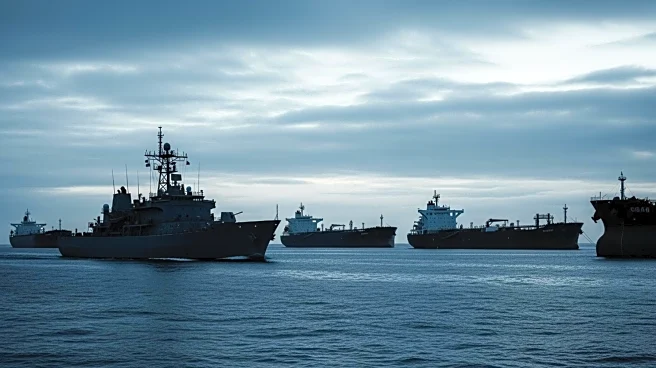
day, have been shut down. This disruption is the most severe in Russia's modern history and comes as oil prices have exceeded $100 a barrel. The attacks have targeted major western oil export ports and pipelines, forcing Russia to rely more on Asian markets for its oil exports. The situation has also led to frequent seizures of Russia-related tankers in Europe, further complicating the export landscape.
Why It's Important?
The halt in Russia's oil export capacity has significant implications for the global oil market and Russia's economy. As one of the world's largest oil exporters, Russia's reduced capacity affects global oil supply and prices, contributing to economic uncertainty. The disruption also highlights the geopolitical risks associated with energy infrastructure and the potential for conflict to impact global markets. For Russia, the loss of oil revenue could strain its national budget and economic stability. The situation underscores the need for countries to diversify their energy sources and enhance the security of their energy infrastructure.
What's Next?
Russia may seek to strengthen its security measures to protect its oil infrastructure from further attacks. The country might also explore alternative export routes and markets to mitigate the impact of the disruptions. On a global scale, countries may increase their focus on energy security and diversification to reduce reliance on vulnerable supply chains. The ongoing conflict and its impact on oil exports could lead to further geopolitical tensions and economic challenges, requiring coordinated international responses.