






What's Happening?
Anthony Bandiero, an attorney and senior legal instructor for Blue to Gold Law Enforcement Training, addressed a question from a California officer regarding warrantless vehicle searches. The officer described an incident where a stolen vehicle was located
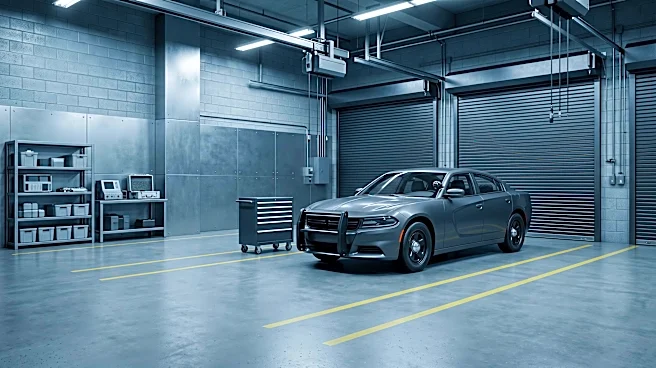
via LoJack in a park known for gang activity. Due to safety concerns arising from a hostile crowd, the vehicle was driven to the police station, where a search was conducted, revealing a loaded extended firearm magazine. The officer questioned whether a warrant was necessary for this search, particularly if the vehicle had not been stolen. Bandiero clarified that the 'no standing' rule for stolen vehicles allows for such searches, but also emphasized that the motor vehicle exception to the Fourth Amendment does not require a warrant even if the vehicle is moved to the station, provided certain conditions are met. These conditions include probable cause, the vehicle not being within curtilage, being readily mobile, and the search adhering to the scope of a warrant.
Why It's Important?
This discussion is crucial for U.S. law enforcement agencies and the public as it clarifies the legal boundaries of warrantless vehicle searches, particularly when officer safety is a factor or when dealing with stolen property. Understanding the motor vehicle exception, as established by Supreme Court cases like *Chambers v. Maroney* and *Michigan v. Thomas*, helps ensure that police actions are constitutionally sound while also allowing officers to perform their duties effectively in potentially dangerous situations. For citizens, it defines the circumstances under which their vehicles can be searched without a warrant, impacting privacy rights. The distinction between searching a stolen vehicle (where the driver has no standing) and a non-stolen vehicle is significant, though the motor vehicle exception can apply in both scenarios under specific conditions. This legal clarity helps prevent wrongful convictions and protects officers from legal challenges.
What's Next?
Law enforcement agencies will likely continue to train their officers on these established legal precedents to ensure compliance with Fourth Amendment rights while maintaining public safety. The principles discussed, particularly the motor vehicle exception and the concept of 'no standing' for stolen property, will remain foundational in police procedure. Officers will need to consistently assess situations for probable cause, exigent circumstances, and the mobility of a vehicle before conducting warrantless searches, whether at the scene or at the station. Legal challenges to such searches will continue to test the application of these rules, potentially leading to further judicial clarification or refinement of police protocols. The advice to obtain a warrant for 'big cases' involving drug traffickers and violent criminals, even when not strictly required, suggests a continued emphasis on bolstering legal defensibility in complex investigations.
Beyond the Headlines
The legal framework surrounding warrantless vehicle searches highlights a continuous tension between individual privacy rights and the practical demands of law enforcement. The ability to move a vehicle to a police station for a search without a warrant, as affirmed by the Supreme Court, reflects a recognition of the dynamic and often dangerous nature of police work. This flexibility is balanced by strict requirements like probable cause, which aim to prevent arbitrary searches. The 'no standing' argument for stolen vehicles underscores a legal principle that individuals cannot assert privacy rights over property they do not lawfully possess. This case also implicitly touches upon the broader issue of community relations and trust in law enforcement, as incidents involving hostile crowds can escalate quickly, necessitating rapid and legally sound decisions by officers to ensure their safety and the integrity of an investigation.