






What's Happening?
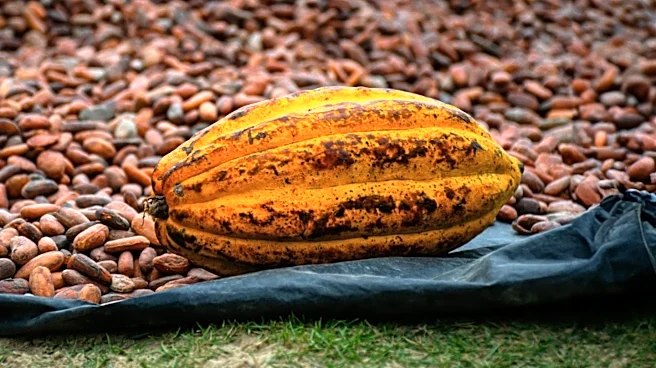
Ghana, the world's second-largest cocoa producer, is anticipating a significant drop in cocoa production by at least 16% for the 2026/2027 season. This decline is attributed to several factors, including El Niño weather conditions, excessive rainfall,
disease, aging farms, and illegal mining activities. The Ghana Cocoa Board (COCOBOD) has identified the Western and Western North regions as particularly affected due to the Cocoa Swollen Shoot Virus Disease and the encroachment of illegal gold mining, which has degraded farmland. In response, COCOBOD is implementing measures such as farm rehabilitation, increased pesticide use, and the reintroduction of a free fertilizer distribution program to mitigate the impact.
Why It's Important?
The anticipated reduction in cocoa output from Ghana could have significant implications for global chocolate prices, potentially leading to higher costs for consumers. As a major cocoa supplier, Ghana's production levels are crucial to maintaining stable prices in the international market. The situation underscores the vulnerability of agricultural sectors to climate change and illegal activities, which can disrupt supply chains and economic stability. The decline also highlights the need for sustainable agricultural practices and effective regulatory measures to protect vital industries from environmental and human-induced threats.
What's Next?
COCOBOD's efforts to address the production decline will be closely monitored, as the success of these measures could influence future cocoa yields and market stability. The international community, including chocolate manufacturers and traders, will likely keep a keen eye on developments in Ghana, as any prolonged disruption could necessitate adjustments in sourcing strategies and pricing models. Additionally, the broader impact of climate change on agriculture may prompt further discussions on global cooperation and investment in sustainable farming practices.