



What's Happening?
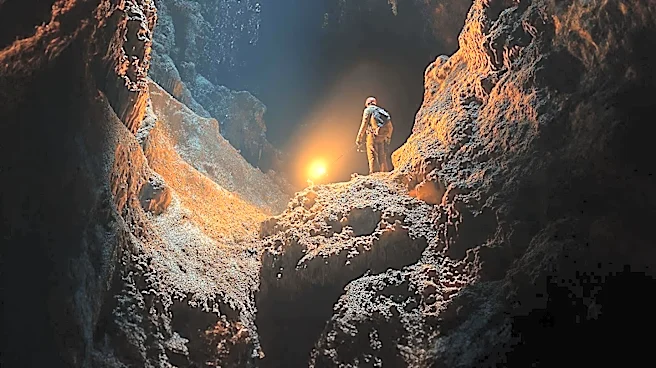
In 1962, French geologist Michel Siffre conducted a groundbreaking isolation experiment, spending two months alone in a cave without a clock, calendar, or sunlight. When he emerged on September 14, he believed it was still August 20, demonstrating a significant
distortion in his perception of time. Siffre, then 23, established a one-way telephone line to a surface team, reporting his waking, eating, and sleeping times, with strict instructions not to be given any time-related information. During his isolation, his internal metronome slowed considerably; a self-timed two-minute count took five minutes in real time. His core body temperature dropped to 34 degrees Celsius, and he experienced extreme humidity. Siffre's sleep-wake cycle extended to approximately 24 hours and 30 minutes. This experiment, initially funded by NASA for mathematical analysis and later by the French army, laid the foundation for understanding the human body's intrinsic clock and its reliance on external cues.
Why It's Important?
Siffre's pioneering work is crucial for understanding human chronobiology and the profound impact of environmental cues on our internal sense of time. His experiments demonstrated that without external markers like daylight, our perception of duration can become significantly distorted, highlighting the brain's reliance on circadian rhythms synchronized by the environment. This research has had practical implications for fields such as space travel, submarine operations, and shift work, where individuals often operate in environments devoid of natural light cycles. Understanding these effects is vital for designing optimal work-rest schedules to maintain cognitive function, psychological well-being, and operational efficiency in isolated or extreme conditions. The findings also contributed to the broader scientific understanding of the human body clock, challenging earlier assumptions and paving the way for more precise research into its intrinsic period, as later confirmed by studies like those at Harvard.
What's Next?
The legacy of Siffre's experiments continues to influence research into human adaptation to isolated and extreme environments. Future studies will likely build upon his findings to further refine our understanding of circadian rhythms and their manipulation. This includes exploring the effects of artificial light, controlled environments, and psychological interventions on time perception and biological clocks. Research into the '48-hour cycles' observed in some of Siffre's later volunteers remains an open area for investigation. The insights gained are particularly relevant for long-duration space missions, where astronauts experience prolonged isolation and altered light cycles, necessitating strategies to mitigate time distortion and maintain crew health. Additionally, the ongoing study of time perception in modern contexts, such as the impact of lockdowns on individuals' sense of time, continues to draw parallels with Siffre's foundational work, emphasizing the enduring relevance of his findings.
Beyond the Headlines
Siffre's experiments delve into the philosophical and psychological dimensions of human existence, revealing how deeply our perception of reality, particularly time, is intertwined with our environment. The experience of losing track of days and weeks in isolation speaks to the fundamental human need for external anchors to structure our lives and maintain a coherent sense of self. This work highlights the fragility of our internal systems when deprived of natural stimuli, prompting reflection on the broader implications of modern lifestyles that increasingly disconnect us from natural light cycles. The military and space agencies' interest in Siffre's research underscores the strategic importance of understanding human endurance and psychological resilience in extreme conditions. His work also serves as a testament to the power of individual scientific inquiry, where a single, self-conducted experiment can open up an entirely new field of study and profoundly impact our understanding of human biology and psychology.