





What's Happening?
Ursa Major has been awarded two U.S. Navy contracts totaling $137 million for the development of new solid rocket motor propulsion systems. These contracts are for the Compact Air-to-Air Missile (CAAM) and the Naval Modular Missile (NMM) programs. The CAAM is designed
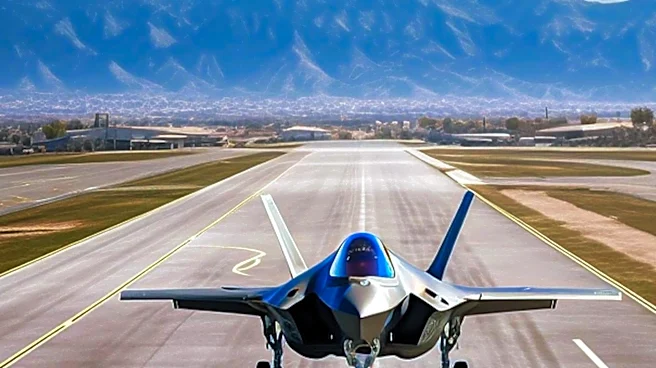
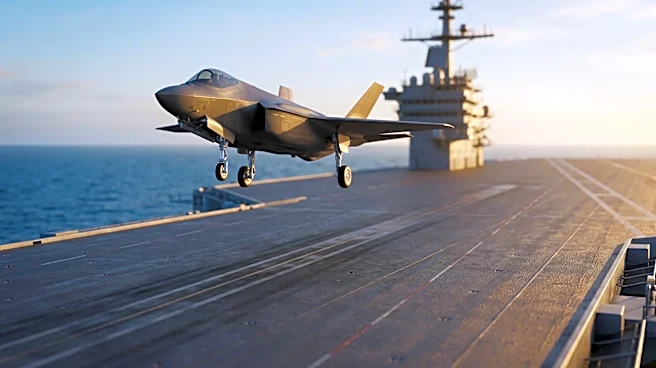
as an inner-boundary defensive missile, intended for internal carriage by the Lockheed Martin F-35 and future aircraft. It will utilize a low-cost 7-inch motor with highly loaded grain to provide increased power in a compact space. The NMM program will receive a 10-inch solid rocket motor from Ursa Major, designed for high-rate production. The Navy aims for the NMM to achieve full capability by fiscal year 2032, replacing the current family of Standard Missiles.
Why It's Important?
These contracts signify a significant advancement in U.S. naval defense capabilities, enhancing the lethality and effectiveness of air-to-air and surface-to-air missile systems. The development of new propulsion technology, particularly the use of highly loaded grain, allows for more powerful and compact missiles, which is crucial for modern aerial combat and naval defense. For the U.S. Navy, these advancements mean improved defensive and offensive capabilities against evolving threats. For Ursa Major, these contracts solidify its position as a key innovator in aerospace propulsion, potentially leading to further defense contracts and technological breakthroughs. The investment in these programs underscores the U.S. commitment to maintaining a technological edge in military hardware, impacting the defense industry and national security strategy.
What's Next?
Ursa Major will proceed with the development and testing of the solid rocket motors for both the CAAM and NMM programs. The Navy is expected to continue evaluating and assessing the requirements for the CAAM, with the goal of integrating it into advanced fighter aircraft. For the NMM, a contract award for the terminal stage interceptor is anticipated in the second quarter of fiscal year 2027, followed by a demonstration of an all-up-round in fiscal year 2029. The ultimate goal is to achieve full operational capability for the NMM by fiscal year 2032, phasing out older missile systems. These developments will involve rigorous testing, integration with existing platforms, and potential collaboration with other defense contractors.
Beyond the Headlines
The development of these advanced missile propulsion systems has broader implications for geopolitical stability and the future of warfare. The emphasis on compact, powerful, and high-rate production missiles suggests a strategic shift towards more agile and adaptable defense systems. This could influence military doctrines and procurement strategies globally, as other nations seek to counter or emulate such capabilities. Furthermore, the technological advancements in solid rocket motors could have spillover effects into commercial space launch industries, fostering innovation in related fields. The contracts also highlight the critical role of private companies like Ursa Major in driving defense innovation, blurring the lines between government research and commercial enterprise in national security.