






What's Happening?
Indian Prime Minister Narendra Modi has officially launched a significant brain research initiative at the Indian Institute of Technology Madras (IIT Madras). This mission, spearheaded by the Sudha Gopalakrishnan Brain Centre (SGBC) at IIT Madras, aims
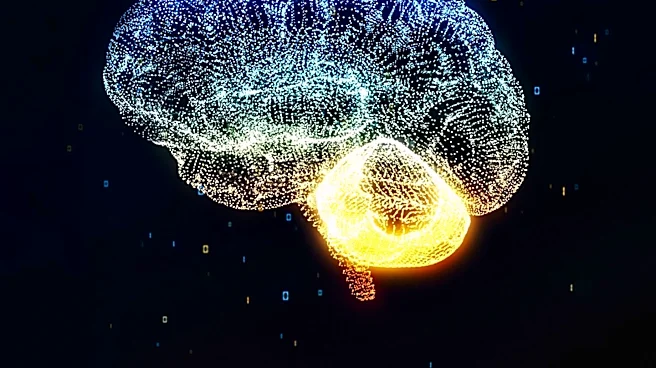
to develop 3D atlases of over 100 human brains. These atlases will span the entire human lifespan, from the fetal stage to old age, and will also include brains affected by various diseases. The project intends to create the world's largest collection of whole-human-brain 3D maps at cellular resolution. Utilizing advanced imaging, computing, and data visualization technologies, the SGBC will transform post-mortem human brains into highly detailed digital maps. These resources are designed to be publicly accessible, providing researchers and medical professionals globally with unprecedented detail into human brain structure. During the launch, Prime Minister Modi also unveiled C-STROKE, which is described as the world's first 3D atlas of an ischemic stroke-affected human brain. This atlas connects clinical Magnetic Resonance Imaging (MRI) scans with microscopic examinations of brain tissue, featuring over 1000 annotated brain sections.
Why It's Important?
This initiative holds substantial importance for the global scientific and medical communities, including those in the U.S. By creating the most comprehensive 3D maps of human brains at a cellular level, the project promises to significantly advance neuroscience and neuromedicine. Researchers worldwide, including those in the U.S., will gain access to detailed data that can lead to a deeper understanding of brain structure, development, and the progression of various neurological diseases. The public accessibility of these resources fosters international collaboration and accelerates discovery, potentially leading to new diagnostic tools and therapeutic targets for conditions like stroke, Alzheimer's, and other brain disorders. The C-STROKE atlas, in particular, offers a novel tool for investigating stroke pathology, which is a leading cause of long-term disability in the U.S. This could inform new treatment strategies and improve patient outcomes. The involvement of over 30 leading researchers from more than 10 countries, including potential U.S. collaborators, underscores the global impact and collaborative potential of this research.
What's Next?
The Sudha Gopalakrishnan Brain Centre will continue its work on creating the 3D atlases, with ongoing efforts to map brains across different developmental stages and disease states. The public release of these detailed digital maps will allow researchers globally to begin utilizing this extensive dataset for their studies. Future developments are expected to include further atlases, building on previously released ones like 'DHARANI' (a second-trimester fetal brain development atlas) and 'ANCHOR' (a brain stem atlas for fetus, child, and adult). The open-access nature of these resources suggests that scientific papers, new research collaborations, and potentially new medical applications will emerge as the data is analyzed by the broader scientific community. The project's ongoing support from over 20 industries and philanthropies indicates a sustained effort to expand its scope and impact, potentially attracting more international partners and funding for subsequent phases of research.
Beyond the Headlines
Beyond the immediate scientific advancements, this initiative highlights a broader trend of globalizing high-tech scientific research and data sharing. The commitment to making these detailed brain atlases publicly accessible challenges traditional proprietary research models and promotes an open science approach, which could influence how large-scale biological data is managed and shared internationally. Ethically, the project raises considerations regarding the use of post-mortem human brains, emphasizing the importance of informed consent and ethical guidelines in such research. Legally, the open-access model will need robust frameworks to ensure data integrity, privacy, and appropriate use across different jurisdictions. Culturally, this project positions India as a significant contributor to cutting-edge neuroscience, fostering international scientific diplomacy and potentially attracting more global talent and investment into its research sector. The long-term implications could include a paradigm shift in how neurological disorders are studied and treated, moving towards more personalized and data-driven medicine.