





What's Happening?
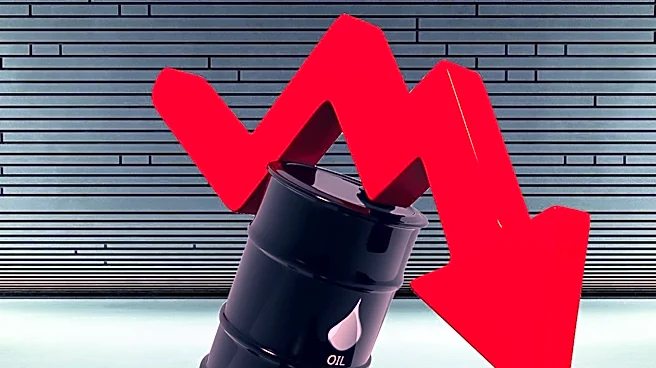
Oil prices have surged over 9% to a one-month high following the announcement of a U.S. naval blockade on Iran's entire coastline, including its ports and oil terminals. This move, set to begin on July 14, 2026, is part of renewed military tensions between
the U.S. and Iran. The blockade aims to restrict Iranian maritime traffic and has led to significant concerns over the supply of oil through the Strait of Hormuz, a critical chokepoint for global energy shipments. Brent crude futures rose by $7.29 to $83.30 per barrel, while U.S. West Texas Intermediate crude increased by $6.73 to $78.14 per barrel. The blockade follows a period of fragile ceasefire and increased Iranian oil exports, which have been slow to sell due to competition from cheaper crude sources. Additionally, disruptions in Russian energy supplies and maintenance at Kazakhstan's Tengiz oilfield have further strained global oil supply chains.
Why It's Important?
The U.S. blockade on Iran is significant as it directly impacts the global oil market, particularly affecting countries reliant on oil shipments through the Strait of Hormuz. This strait is a vital passage for about one-fifth of the world's oil and liquefied natural gas supplies. The blockade could lead to increased oil prices globally, affecting industries and consumers reliant on oil. The situation also highlights geopolitical tensions that can disrupt energy markets, influencing economic stability and international relations. Countries may seek alternative routes to bypass the Strait of Hormuz, potentially reshaping global energy logistics and infrastructure. The U.S. decision to impose a blockade and charge fees for strait transits has been met with opposition from international bodies, indicating potential diplomatic challenges.
What's Next?
Countries are expected to explore long-term solutions to bypass the Strait of Hormuz, with analysts predicting an increase in pipeline capacity in the Middle East. This could shield a significant portion of Gulf oil exports from future disruptions. The U.S. blockade may lead to further military and diplomatic tensions with Iran, potentially escalating into broader conflicts. The international community, including the UN's shipping agency, may continue to oppose the U.S. toll proposal, advocating for free navigation rights. The situation could prompt strategic shifts in global energy policies and alliances, as nations seek to secure stable energy supplies amid geopolitical uncertainties.
Beyond the Headlines
The blockade raises ethical and legal questions about the imposition of tolls on international straits, challenging established norms of free navigation. It also underscores the vulnerability of global energy markets to geopolitical conflicts, prompting discussions on energy security and diversification. The reliance on a few critical chokepoints for oil transport highlights the need for resilient infrastructure and alternative energy sources. The situation may accelerate investments in renewable energy and technological innovations to reduce dependency on oil, influencing long-term shifts in energy consumption patterns and environmental policies.