






What's Happening?
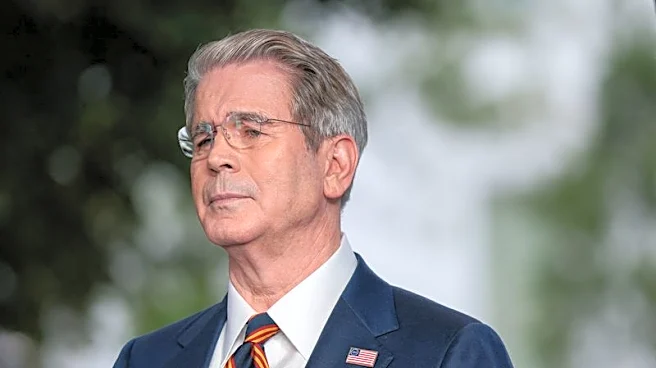
Treasury Secretary Scott Bessent's initiative to stabilize the bond market through an expanded buyback program was swiftly undone by President Trump's announcement of an "ECONOMIC D-DAY" against Iran. On Wednesday, Bessent revealed plans to double buyback operations
for 10- to 30-year debt, from $2 billion to at least $4 billion per operation, starting September 9. This move initially caused the 30-year Treasury yield to drop from 5.34% to 5.184% and the 10-year yield to fall to 4.637%. However, President Trump's subsequent threat against Iran, warning of the "most crushing economic operation ever taken against any country," triggered a sharp reversal. By Thursday, Brent crude prices surged to $94 a barrel, and the 30-year yield climbed back to 5.26%, effectively erasing all gains from the Treasury's intervention within a single trading session.
Why It's Important?
This event underscores the profound influence of geopolitical developments on U.S. financial markets, particularly the bond market. The rapid reversal of gains achieved by the Treasury's intervention highlights the fragility of market stability in the face of significant international tensions. For U.S. industries and economic stakeholders, increased bond yields translate to higher borrowing costs for businesses and consumers, potentially slowing economic growth. The volatility also creates uncertainty for investors, who may shift capital to safer assets or demand higher returns for riskier investments. This incident demonstrates that even well-timed domestic policy tools can be quickly overshadowed by external factors, posing a challenge for economic policymakers aiming to manage market conditions.
What's Next?
The bond market is expected to remain volatile and highly sensitive to geopolitical headlines, especially concerning Iran. Investors will be closely watching for any further statements or actions from President Trump regarding Iran, as well as responses from international actors. The Treasury's buyback program, scheduled to run through November 4, will continue, but its effectiveness may be limited if geopolitical risks persist. Market participants will likely treat any future bond rallies driven by intervention as short-term trading opportunities rather than signals of a sustained trend reversal. The situation also puts pressure on policymakers to consider the broader implications of foreign policy decisions on domestic economic stability.
Beyond the Headlines
This episode reveals a deeper tension between economic policy and foreign policy, illustrating how political rhetoric and international events can directly undermine carefully crafted financial interventions. It highlights the limits of monetary and fiscal tools when confronted with significant geopolitical shocks. The rapid market reaction to President Trump's statement also reflects the interconnectedness of global economies and the immediate impact of perceived threats to oil supplies and international trade. Ethically, it raises questions about the responsibility of political leaders to consider the economic ramifications of their public statements. Culturally, it reinforces the narrative that in an increasingly complex world, market stability is not solely determined by economic fundamentals but is also heavily influenced by political leadership and global events.