






What's Happening?
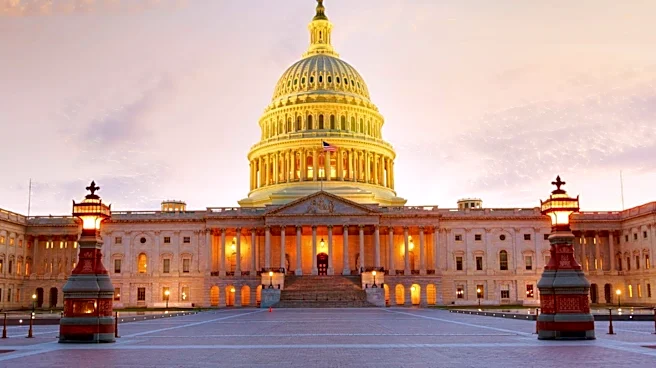
The U.S. House of Representatives is set to consider a continuing resolution (CR) this week to extend funding for federal programs until December 4. This measure is intended to prevent a government shutdown as Congress has not finalized the fiscal year
2027 spending bills. The CR would maintain funding at current levels, allowing more time for negotiations. House Democrats, led by Appropriations Committee Ranking Member Rosa DeLauro, are awaiting a list of 'anomalies' from the White House, which would identify programs needing short-term funding boosts. The Senate is also preparing a CR, with ongoing debates over spending priorities, particularly between defense and non-defense allocations.
Why It's Important?
The consideration of a continuing resolution is crucial to avoid a government shutdown, which could disrupt federal services and impact millions of Americans. The CR provides temporary stability, allowing lawmakers to continue negotiations on the fiscal year 2027 budget. This situation underscores the challenges Congress faces in balancing budget priorities, particularly in areas like defense and social services. The outcome of these negotiations will have significant implications for federal programs, including those related to housing, healthcare, and infrastructure, affecting communities and economic stakeholders nationwide.
What's Next?
If the continuing resolution is passed, it will extend funding until December 4, giving Congress additional time to finalize the fiscal year 2027 budget. Lawmakers will need to address key disagreements, particularly in the Senate, where debates over defense and non-defense spending continue. The resolution's passage will also depend on the White House's input on funding anomalies. Stakeholders, including federal agencies and advocacy groups, will be closely monitoring the situation, as the final budget decisions will impact funding levels for critical programs and services.