





What's Happening?
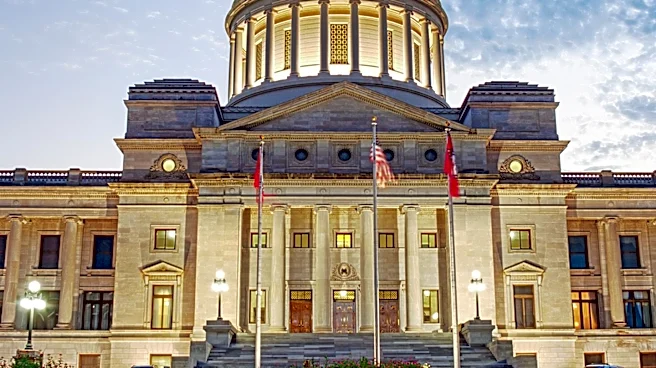
A Pulaski County judge is set to issue a ruling within 30 days regarding a lawsuit concerning the authority to fire top prison officials in Arkansas. The legal dispute centers on laws that shift this power from the Arkansas Board of Corrections to Governor
Sarah Huckabee Sanders. The judge heard arguments on a joint motion filed by Governor Sanders and the board, following an Arkansas Supreme Court ruling that instructed the lower court to consider lifting an injunction against these laws. The conflict began in 2023 after the corrections board attempted to suspend Joe Profiri, Governor Sanders’ appointee for corrections secretary, amidst tensions over overcrowded prisons. The board initially sued, arguing the laws violated Amendment 33 of the Arkansas Constitution, which protects the board's independence. However, after Governor Sanders' appointees gained a majority on the board, a settlement was reached, with the board reversing its stance and agreeing that the laws are constitutional.
Why It's Important?
This ruling is critical for the balance of power within Arkansas's state government and has significant implications for the state's correctional system. If the injunction is lifted, Governor Sanders will gain direct control over the hiring and firing of top prison officials, potentially allowing her to implement her policies more directly and swiftly. This shift could lead to substantial changes in how Arkansas prisons are managed, including addressing issues like overcrowding and staffing. Conversely, if the injunction remains, the Board of Corrections would retain its independent authority, maintaining a check on the governor's power over the prison system. The outcome will also set a precedent for future disputes between the executive branch and independent state boards, potentially influencing governance structures and accountability mechanisms across Arkansas.
What's Next?
The Pulaski County judge's ruling, expected within 30 days, will determine the immediate future of the authority over Arkansas's prison system. If the injunction is lifted, Governor Sanders will likely proceed with her agenda for correctional reform, potentially leading to new appointments and policy directives within the Department of Corrections. If the injunction remains, the legal battle could continue, or the Board of Corrections might reassert its independent oversight. The attorney for former board chairman Benny Magness and board member Lee Watson has urged the judge to maintain the injunction, arguing that the settlement attempts to circumvent the original constitutional protections. The decision will undoubtedly be closely scrutinized by legal experts, political figures, and civil rights advocates, given its implications for both executive power and the rights of incarcerated individuals.
Beyond the Headlines
This case delves into the deeper constitutional questions surrounding the separation of powers and the independence of state boards in Arkansas. Amendment 33 was designed to safeguard the corrections board from political interference, ensuring a degree of autonomy in managing the state's prison system. The settlement, reached after Governor Sanders' appointees secured a majority on the board, raises questions about the integrity of such independent bodies when their composition shifts due to political appointments. The dispute also highlights the ongoing tension between executive authority and established constitutional protections, particularly in areas of public administration that are often subject to political pressure, such as correctional facilities. The judge's decision will not only resolve the immediate conflict but also contribute to the evolving interpretation of constitutional checks and balances within Arkansas's governmental framework.