


What's Happening?
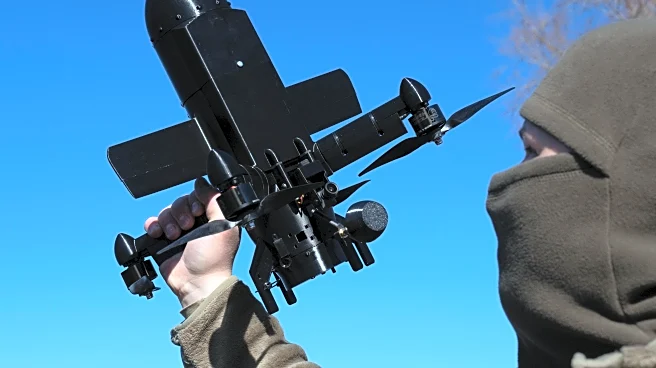
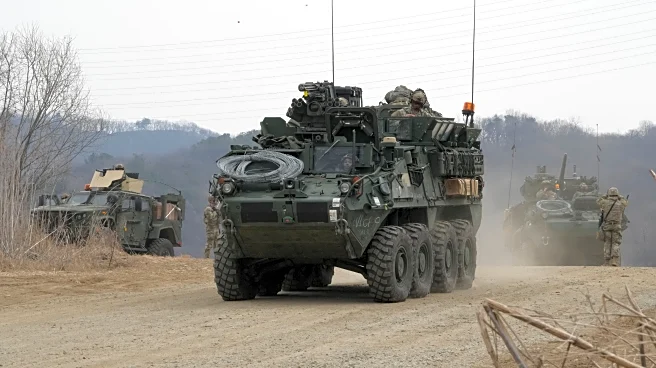
NATO allies, led by the United States, are enhancing their defense capabilities against drone threats along the alliance's eastern border with Russia. This initiative, part of the Eastern Flank Deterrence Line, involves the integration of various sensors
and counter-drone systems to create a shared data network for faster decision-making. The recent exercise, Digital Shield 2.0, tested these capabilities through rapid 90-day cycles, simulating real-world scenarios such as cyberattacks and high-stress conditions. The initiative aims to improve defenses against Russian-style drone attacks by integrating artificial intelligence to analyze sensor data and speed up response decisions.
Why It's Important?
This development is significant as it strengthens NATO's defensive posture against potential threats from Russia, particularly in the context of increasing drone warfare. The integration of advanced technologies like artificial intelligence into defense systems represents a strategic shift towards more agile and responsive military operations. This initiative not only enhances the security of NATO's eastern members but also sets a precedent for future military collaborations and technological advancements within the alliance. The focus on cost-effective solutions to counter inexpensive drone threats is crucial for maintaining a sustainable defense strategy.
What's Next?
The ongoing testing and development under the Eastern Flank Deterrence Line are expected to continue, with further integration of new technologies and systems. NATO allies will likely focus on refining these systems to ensure they can effectively counter evolving drone threats. The initiative may also prompt discussions on broader defense strategies and resource allocation within NATO, as member countries assess the effectiveness of these new technologies in real-world scenarios.