




What's Happening?
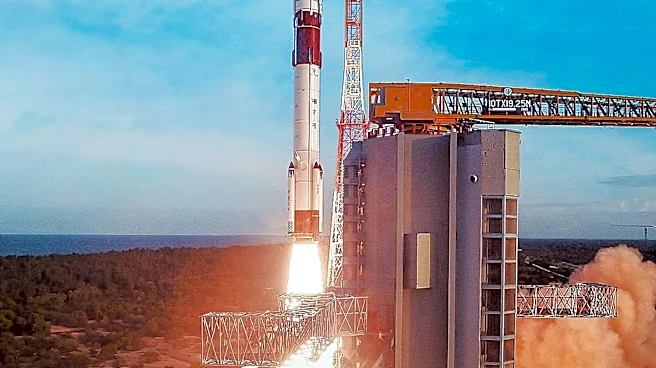
Hyderabad-based Skyroot Aerospace successfully launched Vikram-1, India's first privately developed orbital rocket, from the Indian Space Research Organisation's (ISRO) First Launch Pad at the Satish Dhawan Space Centre in Sriharikota, Andhra Pradesh.
This event, part of Mission Aagaman, signifies a major achievement for India's commercial space sector, making Skyroot the first private Indian company to attempt an orbital launch. The four-stage Vikram-1 launch vehicle, named after Indian space program pioneer Dr. Vikram Sarabhai, is designed to offer rapid, on-demand launch services for small satellites. The seven-story rocket is targeting a 450-km Low Earth Orbit (LEO). This mission follows the company's Vikram-S suborbital mission in November 2022, which was the first privately built rocket launched from Indian soil, laying the groundwork for India's private space ecosystem.
Why It's Important?
The successful launch of Vikram-1 by Skyroot Aerospace is a pivotal moment for India, positioning it among a select group of countries with private companies demonstrating orbital launch capabilities. This development underscores the growing privatization trend in the global space industry, which could lead to increased innovation, reduced launch costs, and more frequent access to space. For India, it reflects the impact of space sector reforms aimed at fostering private enterprise and innovation, as highlighted by Prime Minister Narendra Modi. The ability to offer flexible, 'cab service to space' launch options for satellites could attract international customers, boosting India's economic standing in the global space market and creating new opportunities for technological advancement and job creation within the country.
What's Next?
If the Vikram-1 mission successfully achieves orbit, Skyroot Aerospace plans to expand its offerings to provide flexible launch services, aiming to become a 'cab service to space' for customers seeking dedicated launches for satellites and future space missions. This success is expected to further stimulate India's private space ecosystem, encouraging more private companies to enter the sector and innovate. The Indian government's continued support through space sector reforms will likely play a crucial role in facilitating this growth. The achievement could also lead to increased international collaborations and investments in India's burgeoning private space industry, as the country demonstrates its capability to support advanced space endeavors beyond its state-run programs.
Beyond the Headlines
The successful launch of Vikram-1 has broader implications beyond commercial space. It symbolizes a shift in how space exploration and utilization are approached, moving from solely government-led initiatives to a more dynamic, privately driven model. This shift could democratize access to space, making it more accessible for research, commercial ventures, and even educational purposes. Ethically, it raises questions about the regulation of private space activities and the potential for increased space debris. Culturally, it reinforces India's image as a leader in scientific and technological innovation, inspiring future generations to pursue careers in STEM fields. The long-term impact could include a more competitive and efficient global space market, with India playing a significant role in shaping its future.