
What's Happening?
A recent study conducted by researchers at the University of California, Berkeley, has revealed that Anna's hummingbirds are evolving their bill shapes in response to human activities. The study focused
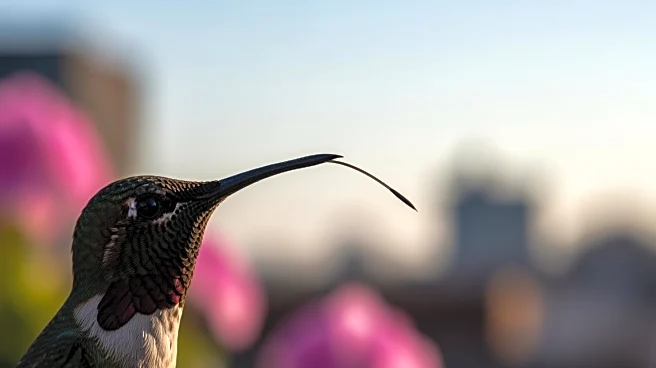
on how these birds, which are common in North America, particularly along the West Coast, have adapted to environments altered by human presence. The researchers found that the availability of non-native nectar sources, such as eucalyptus, and the widespread use of hummingbird feeders have influenced the evolution of the birds' bill shapes. The study utilized historical data from museum specimens and community science counts to track changes in bill shape and hummingbird populations over time. The findings indicate that the birds' bills have become longer and more tapered, a change linked to the increased presence of feeders and eucalyptus.
Why It's Important?
The study highlights the significant impact human activities can have on wildlife evolution, even over relatively short periods. The adaptation of Anna's hummingbirds to human-altered environments demonstrates how species can rapidly evolve in response to new ecological pressures. This research underscores the broader implications of human influence on biodiversity, as it shows that even unintended changes in the environment can drive evolutionary processes. The findings are particularly relevant for conservation efforts, as they provide insight into how species might adapt to changing habitats and climate conditions. Understanding these dynamics is crucial for developing strategies to preserve biodiversity in the face of ongoing environmental changes.
What's Next?
Future research could explore the long-term implications of these evolutionary changes on Anna's hummingbird populations and their ecosystems. Scientists may investigate whether similar patterns of rapid evolution are occurring in other species affected by human activities. Additionally, conservationists might use these findings to inform habitat management practices, ensuring that human interventions do not inadvertently harm wildlife. The study also opens up avenues for further exploration into the role of human-provided resources, such as feeders, in shaping the evolutionary trajectories of other species.
Beyond the Headlines
The study raises ethical considerations about the role humans play in shaping the natural world. While the adaptation of Anna's hummingbirds to human environments might seem beneficial, it also reflects a broader trend of wildlife becoming increasingly dependent on human-altered landscapes. This dependency could pose risks if human activities change or if resources like feeders are removed. The research also highlights the need for a deeper understanding of how human actions, even those with positive intentions, can have complex and far-reaching effects on ecosystems.