



What's Happening?
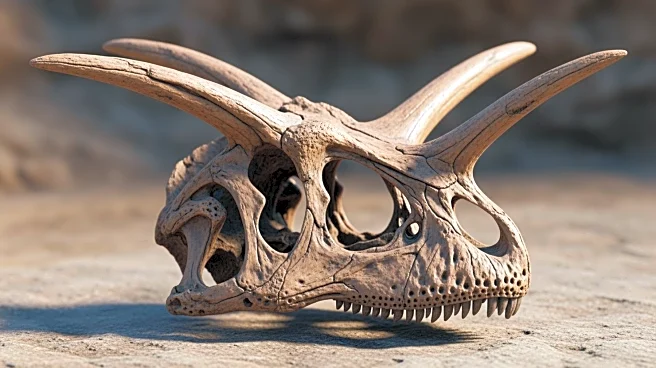
A fossilized skull of a 307-million-year-old creature, Tyrannoroter heberti, found in Nova Scotia, is reshaping the understanding of early herbivory among land vertebrates. The discovery suggests that plant-eating behaviors evolved independently in multiple
groups of early land vertebrates, rather than from a common ancestor. The fossil shows dental adaptations for grinding vegetation, indicating that herbivory may have developed much earlier than previously thought.
Why It's Important?
This discovery has significant implications for the study of evolutionary biology, as it challenges existing timelines and theories about the development of herbivory in land vertebrates. Understanding these evolutionary processes can provide insights into the adaptation and survival strategies of ancient species, offering a deeper understanding of the ecological dynamics of past eras. This knowledge can also inform current studies on biodiversity and the evolution of modern species.