






What's Happening?
Japan's Defense Minister, Shinjiro Koizumi, has dismissed accusations from China that Japan is pursuing a policy of 'new militarism.' This comes as Japan, under Prime Minister Sanae Takaichi, has been shifting towards a more proactive defense strategy,
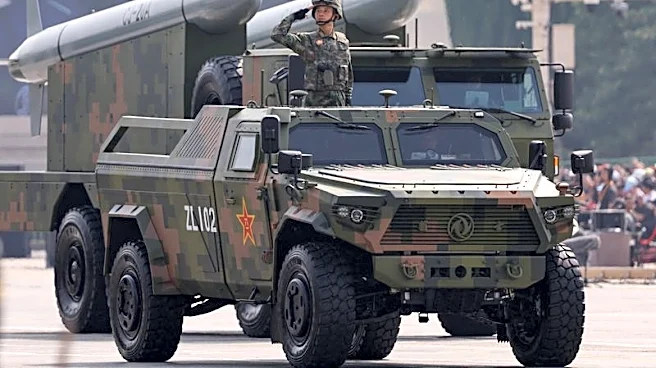
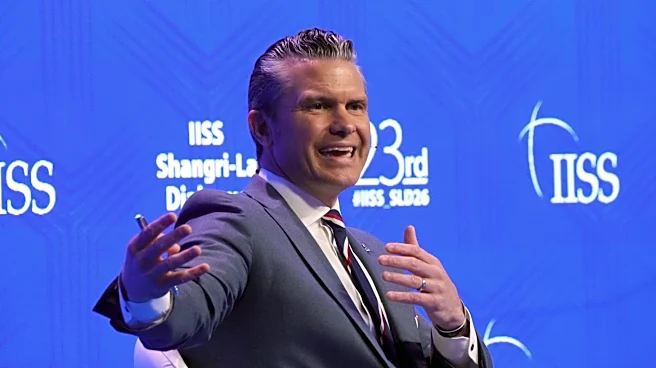
moving away from its post-World War II pacifist stance. The change has been encouraged by the United States and has led to criticism from Beijing, which views Japan's actions as potentially destabilizing for the region. Koizumi, speaking at the Shangri-La Dialogue in Singapore, emphasized that Japan does not possess nuclear weapons or strategic bombers, unlike China, which has been rapidly expanding its military capabilities. He highlighted that Japan's defense policy is transparent and focused on building capabilities in artificial intelligence, uncrewed systems, and cyber and space defense.
Why It's Important?
The ongoing tension between Japan and China over military policies is significant as it reflects broader regional security dynamics in Asia. Japan's shift towards a more assertive defense posture, supported by the U.S., is seen as a counterbalance to China's military expansion. This development could influence regional alliances and defense strategies, potentially impacting the balance of power in Asia. For the U.S., Japan's military strengthening aligns with its strategic interests in maintaining stability and countering China's influence in the region. The situation also underscores the importance of transparency in military activities to prevent misunderstandings and conflicts.
What's Next?
Japan is expected to continue enhancing its defense capabilities with a focus on transparency and technological advancements. The ongoing dialogue at forums like the Shangri-La Dialogue will be crucial for addressing regional security concerns and fostering communication between nations. China's response to Japan's defense policies and its own military activities will be closely monitored by regional and global powers. The potential for diplomatic engagements or further tensions will depend on how both countries navigate their defense strategies and regional relationships.
Beyond the Headlines
The accusations of 'new militarism' against Japan highlight the complex historical and cultural narratives in Asia, where past conflicts and colonial histories still influence current geopolitics. Japan's efforts to redefine its defense policy while maintaining its image as a 'peace-loving' nation reflect the challenges of balancing national security with historical perceptions. The situation also raises questions about the role of international forums in mediating such disputes and the effectiveness of diplomatic channels in preventing escalation.