






What's Happening?
Tybee Island, Georgia, has successfully secured federal funding to replenish its severely eroded beaches with sand. This development comes after the island was initially denied funding earlier this year. The U.S. Army Corps of Engineers will undertake
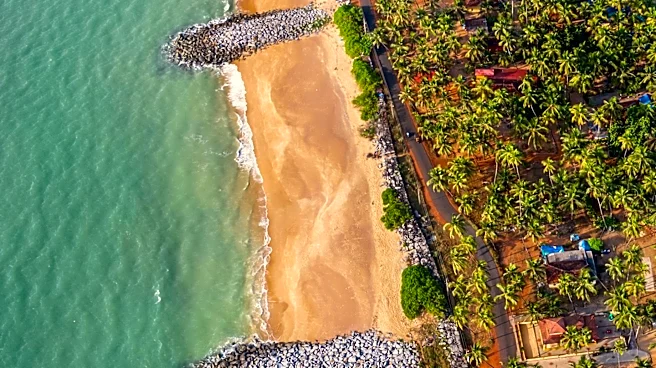
a renourishment project this winter, which is critical for the island's rapidly eroding coastline. Portions of the beach and dunes are badly damaged from tides and storms, with some areas showing a five-foot cliff where a gradual slope should be. The natural sand-sharing system, which typically accumulates sand from islands farther north, has been disrupted by human activities such as development, seawalls, jetties, and the creation of shipping channels. This disruption has led to Georgia's barrier islands consistently losing sand. City Manager Bret Bell described the erosion as 'extremely stark and startling,' noting its impact on vegetation, sea turtle nests, and local businesses, including hotels losing bookings due to the poor beach conditions. The erosion also poses a risk to the island and mainland, especially with sea levels rising by about half an inch annually due to climate change.
Why It's Important?
The securing of federal funding for Tybee Island's beach replenishment is crucial for several reasons. Environmentally, it addresses the severe erosion that threatens the island's natural ecosystem, including sea turtle nesting sites and dune systems that act as natural barriers against rising sea levels and storm surges. Economically, Tybee Island relies heavily on tourism, and eroded beaches directly impact local businesses, such as hotels and rental operations, leading to lost revenue and economic instability. The project's innovative approach of depositing dredged sand from the Savannah River shipping channel into the shallows off Tybee's beach is significant. This method aims to minimize wave action and allow sand to travel more naturally, potentially extending the life of the nourishment from seven to ten years. This could serve as a model for other coastal communities facing similar erosion challenges, offering a more sustainable and cost-effective long-term solution for beach preservation. The initial denial of funding highlighted a broader issue of underfunded federal beach renourishment programs, forcing communities to compete for limited resources, and the eventual 'miracle' funding underscores the vulnerability of coastal areas to such budgetary constraints.
What's Next?
The beach renourishment project on Tybee Island is slated to begin this winter. The U.S. Army Corps of Engineers will implement a new strategy by depositing sand dredged from the Savannah River shipping channel into the shallows off Tybee's beach. This method is expected to reduce wave action and promote more natural sand distribution, potentially extending the effectiveness of the nourishment from the typical seven years to ten years. Local officials, residents, and Georgia's congressional delegation will likely monitor the project's progress and its long-term impact on the beach's stability and the local economy. The success of this innovative approach could influence future coastal management strategies and funding allocations for other erosion-prone areas along the East Coast. Continued lobbying efforts and community engagement may be necessary to ensure sustained federal support for such critical infrastructure projects, especially given the ongoing challenges posed by climate change and rising sea levels.
Beyond the Headlines
The situation on Tybee Island highlights the broader implications of climate change and human activity on coastal environments. The disruption of the natural sand-sharing system due to development and shipping channels underscores the delicate balance between economic development and ecological preservation. The reliance on federal funding for beach replenishment also raises questions about the long-term financial sustainability of maintaining coastal communities in the face of accelerating environmental changes. The 'miracle' of diverted funds from New Jersey projects, while beneficial for Tybee, points to a reactive rather than proactive national strategy for coastal resilience. This incident could prompt a reevaluation of federal funding mechanisms and the development of more comprehensive, forward-thinking policies to protect vulnerable coastlines. Furthermore, the impact on sea turtle nests brings to light the ethical considerations of human intervention in natural habitats and the need for integrated conservation efforts alongside infrastructure projects. The struggle to secure funding and the innovative solutions being tested reflect a growing urgency to adapt to environmental shifts and protect both human communities and biodiversity.