








What's Happening?
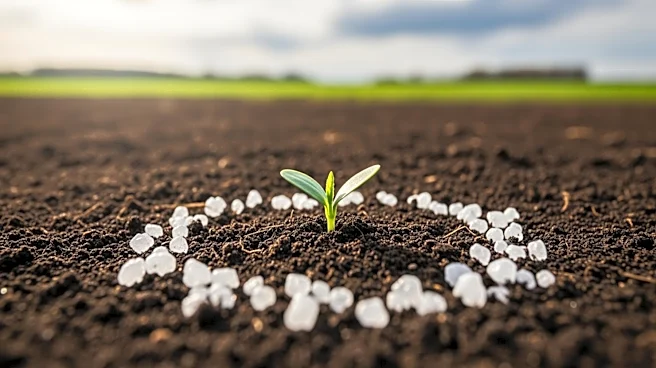
The upcoming agricultural year in India is expected to face significant challenges due to an unprecedented supply shock in fertilizers. The conflict in West Asia has disrupted the supply of key raw materials and intermediates such as natural gas, ammonia,
and sulphur, affecting the availability of fertilizers like urea and di-ammonium phosphate (DAP). The closure of the Strait of Hormuz has impacted around one-third of the world's seaborne fertilizer trade. With major producers like Russia and China prioritizing domestic availability and restricting exports, India, which is heavily import-dependent for plant nutrients, is likely to experience mounting shortages.
Why It's Important?
The fertilizer supply shock poses a serious threat to Indian agriculture, which relies heavily on imported fertilizers for crop production. The shortage could lead to reduced agricultural output, affecting food security and economic stability in the country. The situation highlights the need for reforms in India's fertilizer subsidy regime, with suggestions to replace product-wise subsidies with a flat per-acre payment to farmers. This approach could encourage more efficient use of resources and reduce dependency on imports. The crisis also underscores the importance of developing alternative nutrient sources and enhancing domestic production capabilities to mitigate future supply disruptions.