
What's Happening?
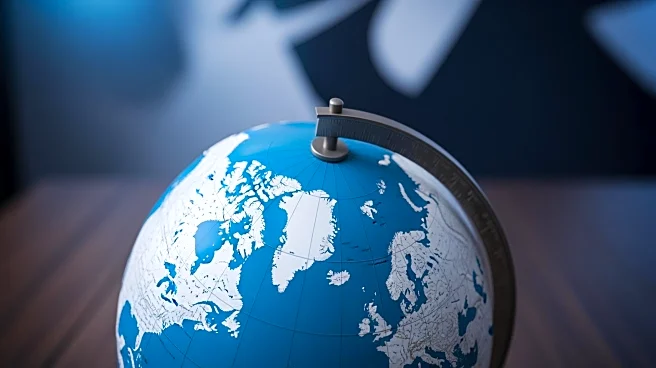
French President Emmanuel Macron has publicly criticized U.S. President Donald Trump for threatening to impose steep tariffs on European goods if Europe does not allow the U.S. to take over Greenland.
Speaking at the World Economic Forum in Davos, Macron stated that Europe would not succumb to bullying tactics and emphasized the importance of territorial sovereignty and the rule of law. This statement comes amid escalating tensions between the U.S. and Europe, with Trump threatening tariffs on French wine and champagne. Macron's remarks highlight a growing trans-Atlantic dispute, as he accused the U.S. of using tariffs as leverage against European sovereignty. The situation has prompted EU leaders to plan an emergency summit to address the issue.
Why It's Important?
The dispute between the U.S. and Europe over Greenland and the potential imposition of tariffs has significant implications for international trade and diplomatic relations. If the U.S. follows through with its tariff threats, it could lead to a trade war, affecting industries on both sides of the Atlantic. European countries, particularly those in the EU, may respond with their own trade sanctions, further straining economic ties. The situation also underscores the challenges of maintaining international cooperation in a geopolitical climate where unilateral actions are increasingly common. The outcome of this dispute could set a precedent for how territorial and trade disagreements are handled in the future.
What's Next?
EU leaders are scheduled to meet in Brussels for an emergency summit to discuss the Greenland issue and potential responses to the U.S. tariff threats. The EU may consider implementing tariffs on U.S. goods or using its Anti-Coercion Instrument to limit U.S. access to European markets. The situation is likely to evolve as both sides weigh their options and potential consequences. The outcome of the summit could influence future trade negotiations and diplomatic relations between the U.S. and Europe.
Beyond the Headlines
The dispute over Greenland and the use of tariffs as a geopolitical tool raises questions about the balance of power in international relations. Macron's stance reflects a broader European concern about the erosion of multilateralism and the rise of unilateral actions by powerful nations. The situation also highlights the importance of diplomatic channels and international organizations in resolving disputes peacefully. As the world becomes more interconnected, the need for cooperative approaches to global challenges becomes increasingly apparent.