
What's Happening?
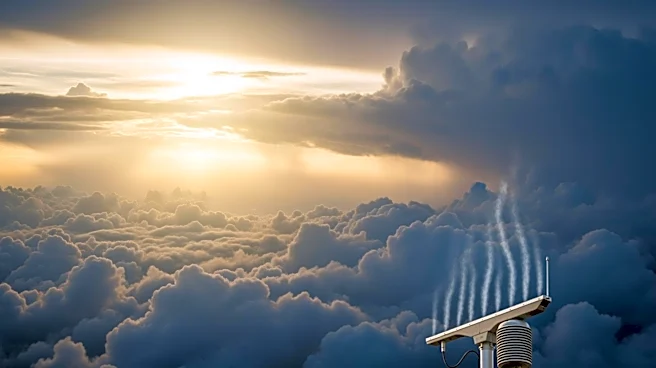
Cloud seeding, a method of weather modification, is gaining renewed attention as regions worldwide face increasing water scarcity. The technique involves dispersing substances like silver iodide into clouds
to encourage precipitation. This practice has been adopted by numerous countries, including China, which operates the world's largest cloud-seeding program. In the U.S., states like Utah are exploring cloud seeding to combat drought and replenish water bodies such as the Great Salt Lake. Despite its potential, the effectiveness of cloud seeding remains debated, with experts questioning its ability to produce significant rainfall. The method is also criticized for potentially diverting attention from more sustainable water management practices.
Why It's Important?
The intensification of cloud seeding efforts highlights the urgent need for solutions to global water shortages, exacerbated by climate change and overconsumption. As water scarcity threatens agriculture, economies, and public health, cloud seeding presents a controversial yet appealing option for some regions. However, its uncertain efficacy and potential to distract from necessary conservation measures pose significant challenges. The reliance on cloud seeding could lead to increased water consumption, further straining resources. This situation underscores the importance of developing comprehensive water management strategies that balance technological interventions with sustainable practices.
What's Next?
As cloud seeding continues to be explored, its role in addressing water scarcity will likely be scrutinized. Stakeholders, including governments and environmental organizations, may push for more rigorous scientific evaluations to determine its effectiveness. Additionally, there may be increased calls for policies that prioritize sustainable water use and infrastructure improvements. The potential for international tensions over perceived weather manipulation could also prompt discussions on regulatory frameworks for weather modification technologies.
Beyond the Headlines
The ethical and geopolitical implications of cloud seeding are significant. The notion of controlling weather patterns raises questions about sovereignty and the potential for cross-border conflicts. Furthermore, the historical context of cloud seeding, including its military applications and association with conspiracy theories, adds complexity to its acceptance. As climate change continues to impact global water resources, the debate over cloud seeding's role in sustainable water management is likely to intensify.