






What's Happening?
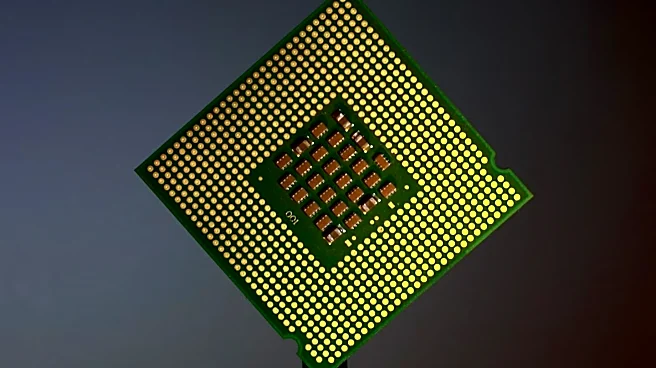
The competition between the U.S. and China in the field of artificial intelligence (AI) is escalating, with Chinese startups rapidly advancing their AI models and American companies increasingly utilizing these technologies. Despite U.S. restrictions
on semiconductor access, Chinese firms are making significant strides in AI development, leading to a perception among some Americans that China is ahead in this technological race. This has sparked debates in the U.S. about the need for open-source AI models and the potential risks of closing off such technologies. The situation is further complicated by geopolitical tensions, as both nations vie for dominance in AI capabilities.
Why It's Important?
The AI race between the U.S. and China has significant implications for global technological leadership and economic power. As AI becomes increasingly integral to various industries, the country that leads in AI development could gain substantial economic and strategic advantages. The debate over open-source AI models also raises important questions about innovation, security, and international collaboration. For U.S. policymakers and businesses, navigating these challenges will be crucial in maintaining competitiveness and ensuring that AI technologies are developed and used responsibly.
What's Next?
As the AI competition continues, both the U.S. and China are likely to increase investments in AI research and development. Policymakers in the U.S. may need to address concerns about open-source models and consider strategies to support domestic AI innovation while managing security risks. Internationally, there may be efforts to establish norms and agreements on AI development and use, as other countries watch the U.S.-China dynamic closely. The outcome of these developments could shape the future of AI and its role in global economic and political landscapes.