






What's Happening?
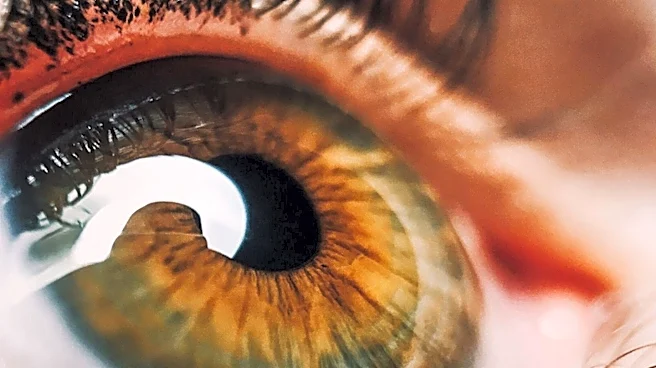
A 38-year-old teacher from Jerusalem, identified as Aya, has experienced a significant improvement in her vision following a corneal surgery at Hadassah Medical Center. Aya suffered from advanced keratoconus, a condition that causes the cornea to thin
and bulge into a cone shape, severely affecting her ability to perform daily tasks such as reading, driving, and teaching. The surgery involved the implantation of a ring made from donated human corneal tissue, a procedure known as corneal allogeneic intrastromal ring segment implantation (CAIRS). This innovative treatment was performed by Prof. David Smadja and Dr. Itay Lavy, using a femtosecond laser to precisely shape and insert the tissue into Aya's cornea. The procedure has helped flatten the cornea, significantly improving her vision from 10% to 90% with glasses.
Why It's Important?
This surgical advancement is significant as it offers a promising alternative to traditional treatments for keratoconus, which often involve rigid contact lenses or full corneal transplants. The use of donor tissue in CAIRS may provide a more natural integration with the patient's cornea, potentially reducing complications associated with synthetic implants. This development could delay or even prevent the need for more invasive procedures like full corneal transplants, offering patients a less intrusive option with quicker recovery times. The success of Aya's surgery highlights the potential for this treatment to restore independence and improve quality of life for individuals affected by severe keratoconus.
What's Next?
Following the success of Aya's surgery, Hadassah Medical Center may continue to explore and refine the CAIRS procedure as a viable treatment for keratoconus. The positive outcomes could encourage further research and adoption of this technique in other medical centers, potentially benefiting a larger population of patients with similar conditions. Additionally, the medical community may observe and evaluate the long-term effects and success rates of this procedure to establish it as a standard treatment option.
Beyond the Headlines
The use of donated human tissue in medical procedures raises important ethical considerations regarding donor consent and the allocation of scarce resources. As this treatment becomes more widespread, it may prompt discussions about the ethical sourcing and distribution of donor tissues. Furthermore, the success of such innovative procedures could drive advancements in other areas of ophthalmology, encouraging the development of new techniques that leverage human tissue for medical interventions.