
What's Happening?
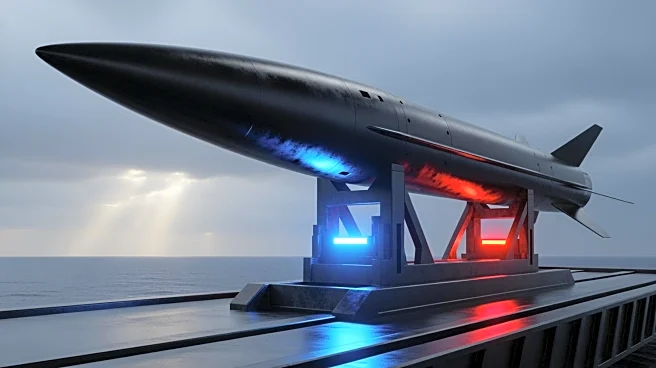
The Pentagon's 2025 report reveals that China has deployed the DF-27, a conventional intercontinental ballistic missile (ICBM) capable of reaching parts of the U.S. homeland. This missile, with a range
of 5,000-8,000 km, includes an anti-ship ballistic missile (ASBM) variant, posing a threat to Pacific naval forces. The DF-27's deployment marks China's advancement in missile technology, adding to its arsenal of hypersonic and maneuverable missiles. These developments reflect China's strategic focus on enhancing its military capabilities, particularly in the Western Pacific, where it aims to challenge U.S. naval dominance.
Why It's Important?
The deployment of the DF-27 missile underscores the growing military capabilities of China and its potential to alter the strategic balance in the Pacific region. The missile's ability to target U.S. territories and naval forces increases the risk of military confrontation and complicates defense strategies. This development highlights the need for the U.S. and its allies to reassess their defense postures and consider new measures to counter China's expanding missile capabilities. The situation also raises concerns about the potential for misinterpretation or escalation in a crisis, given the dual-use nature of China's missile systems.
Beyond the Headlines
China's missile advancements reflect broader geopolitical dynamics, including its desire to assert regional dominance and challenge U.S. influence. The DF-27's deployment may prompt other nations to enhance their missile defenses and reconsider arms control agreements. The situation also emphasizes the importance of diplomatic engagement to address security concerns and prevent an arms race. As China continues to expand its military capabilities, the international community faces the challenge of balancing deterrence with efforts to maintain peace and stability in the region.