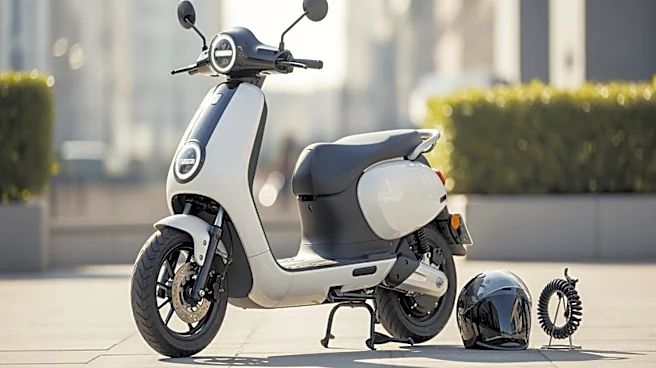










What's Happening?
In Pennsylvania, e-scooters are currently not legal for use on public streets and sidewalks, despite their popularity. State Representative Emily Kinkead has introduced House Bill 1633 to address this issue by establishing a legal framework for e-scooter use.
The bill seeks to build on the success of a pilot program in Pittsburgh, which demonstrated significant public interest and utility in e-scooters as a micromobility option. The proposed legislation would allow second- and third-class cities in Pennsylvania to create e-scooter programs with commercial providers, following rules developed during the Pittsburgh pilot. These rules include age restrictions, speed limits, and operational guidelines to ensure safety. The bill also mandates commercial operators to carry substantial insurance coverage and establish complaint hotlines for issues like abandoned scooters.
Why It's Important?
The legalization of e-scooters in Pennsylvania could significantly impact urban mobility, providing a convenient and affordable transportation option for residents, particularly in areas with limited public transit. The legislation aims to close the gap in public transit, offering a solution for the 'first and last mile' problem faced by many commuters. By implementing safety regulations and insurance requirements, the bill addresses concerns about rider safety and liability, which have been major obstacles to e-scooter adoption. The move could also stimulate economic activity by enabling e-scooter companies to operate legally, potentially creating jobs and generating revenue for local governments.
What's Next?
If passed, the bill would allow cities to adopt e-scooter programs, potentially leading to widespread availability across Pennsylvania. The legislation's progress will be closely watched by stakeholders, including city officials, transportation advocates, and e-scooter companies. Amendments may be introduced to address additional safety concerns, such as helmet requirements for minors. The outcome of this legislative effort could influence similar initiatives in other states, as policymakers seek to balance innovation in transportation with public safety.